There’s a space under your house that you probably haven’t looked at in months — maybe years. It’s dark, cramped, and easy to forget about.
That’s exactly the problem.
Crawl space water damage is one of the most common and most overlooked issues in Northern Colorado homes. By the time homeowners realize something is wrong — a musty smell that won’t go away, floors that feel soft or bouncy, allergies that get worse at home — water has often been sitting in the crawl space for weeks or months, quietly causing structural damage and growing mold.
If your home sits on a crawl space foundation (and many homes across Johnstown, Loveland, Windsor, Fort Collins, and the surrounding Front Range do), here’s what you need to know.
Why Crawl Spaces Are Especially Vulnerable in Colorado
You might think “Colorado is dry — crawl spaces aren’t a problem here.” But the opposite is true. Several factors specific to our region make crawl space moisture one of the most common restoration issues we see at Revive.
Freeze-thaw cycles. Northern Colorado winters mean repeated freezing and thawing of the soil around your foundation. This creates small cracks and gaps in foundation walls that let water seep in when the ground saturates in spring.
Spring snowmelt. When the snowpack melts — especially after a heavy winter — that water percolates through the soil for weeks. Even if your yard looks dry on the surface, underground moisture can be pushing against your foundation and seeping into the crawl space below grade.
Clay soil expansion. Much of the Front Range sits on expansive clay soils. When these soils get wet, they swell and press against foundation walls. When they dry, they shrink and create gaps. This constant push-and-pull cycle creates pathways for water to enter your crawl space that didn’t exist when the home was built.
Summer humidity. Once you get past the dry winter, summer moisture in the air combines with the naturally cooler temperatures in your crawl space to create condensation. Even without a leak, ambient humidity alone can raise crawl space moisture levels into the danger zone.
Improper grading and drainage. Many homes in Northern Colorado — especially older ones — have soil grading that directs water toward the foundation instead of away from it. Add clogged gutters or missing downspout extensions, and you’ve got a recipe for crawl space flooding every time it rains.
5 Warning Signs You Have Crawl Space Water Damage
You don’t have to crawl under your house to suspect a problem. Your home gives you plenty of clues upstairs.
1. Musty or earthy smell. This is the most common first sign. If your home has a persistent smell that you can’t trace to any specific source — especially on the main level — it’s almost certainly coming from your crawl space. That smell is mold and mildew growing on damp wood, insulation, and soil.
2. Sagging, soft, or bouncy floors. The floor joists and subfloor panels that support your main level sit right on top of the crawl space. When those wooden structural components absorb moisture, they swell, soften, and eventually weaken. If a section of flooring feels different underfoot — softer, springy, or uneven — crawl space moisture is the most likely cause.
3. Higher-than-normal indoor humidity. If your home feels humid even with the AC running, or if you notice condensation on windows during moderate weather, moisture may be migrating up from the crawl space. In homes with vented crawl spaces, this “stack effect” pulls moist air up through the floor and into your living areas.
4. Increased allergy symptoms at home. Mold spores from a wet crawl space travel upward into your living space through gaps in the flooring, around plumbing penetrations, and through your HVAC system. If your family’s allergies seem worse at home than anywhere else, crawl space mold is a common culprit.
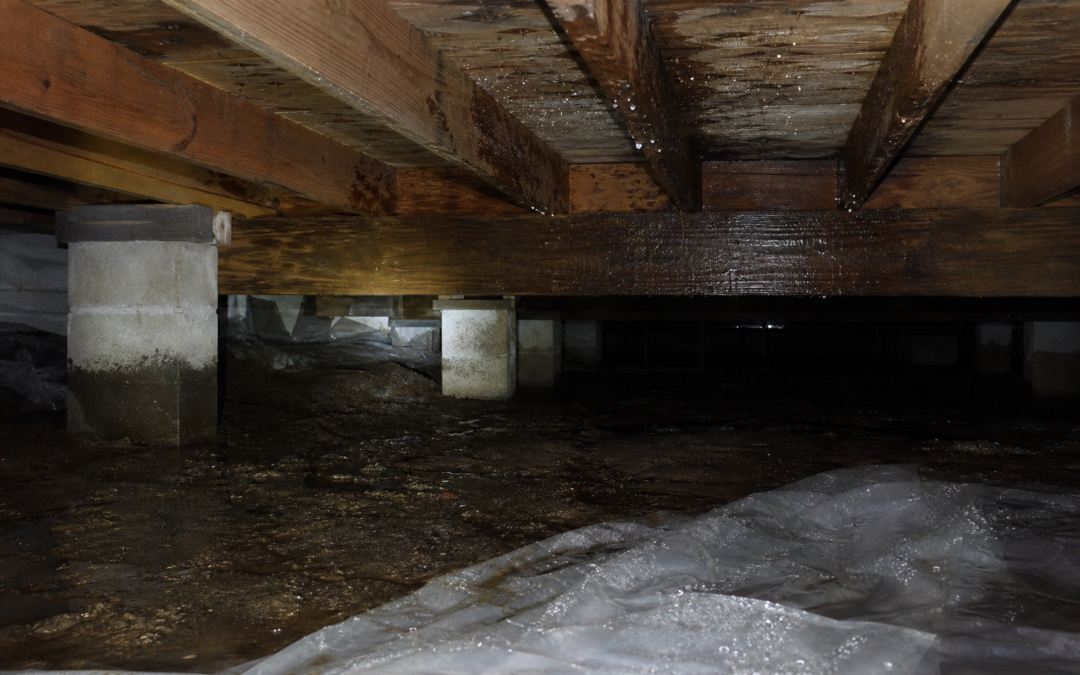
5. Visible mold, standing water, or damaged insulation. If you do look under the house, the signs can be dramatic — puddles or standing water, black or white mold on floor joists and subflooring, fallen or hanging insulation (fiberglass batts are notorious for absorbing water and falling down), and wood that’s visibly darkened or soft.
The Real Risks of Ignoring Crawl Space Moisture
Crawl space water damage doesn’t fix itself. Left unaddressed, it escalates into problems that are significantly more expensive to repair.
Structural damage. Wooden floor joists, rim joists, and sill plates that stay damp develop wood rot. Over time, this compromises the structural integrity of your home’s floor system. We’ve seen floor joists in Northern Colorado crawl spaces that were so deteriorated they needed sistering or full replacement — a project that costs many times more than the drying and encapsulation that would have prevented it.
Mold growth. Mold thrives in the dark, damp conditions a wet crawl space provides. Once established, it produces spores that affect indoor air quality throughout the home. Mold remediation in a crawl space is doable, but it’s far better to address the moisture before mold gets a foothold.
Pest infestations. Damp crawl spaces attract termites, carpenter ants, rodents, and other pests. Moisture-damaged wood is easier for wood-destroying insects to colonize, and standing water provides a water source for all kinds of unwanted visitors.
Energy waste. Wet insulation loses most of its insulating value. A damp crawl space also creates temperature differentials that make your HVAC system work harder. Homeowners often notice higher energy bills without realizing the crawl space is the root cause.
Reduced home value. When it comes time to sell, crawl space moisture problems will show up in the inspection. Unresolved moisture issues can derail a sale or result in significant price reductions.
What Proper Crawl Space Drying and Restoration Looks Like
Fixing crawl space water damage isn’t as simple as pointing a fan under the house. Here’s what professional restoration involves:
1. Assessment and moisture mapping. We use moisture meters and thermal imaging to understand exactly where water is coming in, how wet the structural components are, and how far the damage extends.
2. Water extraction. If there’s standing water, we pump it out using commercial extraction equipment.
3. Structural drying. We place commercial dehumidifiers and air movers in the crawl space to draw moisture out of the wood framing, subflooring, and soil. This process typically runs 3-5 days depending on how saturated the materials are.
4. Damaged material removal. Wet insulation gets removed (it’s essentially ruined once saturated). Any materials with mold growth are addressed with antimicrobial treatment or removal as needed.
5. Source correction. Drying is pointless if water is going to come right back. We identify and recommend corrections to the water source — whether that’s grading, drainage, gutter issues, or foundation cracks.
6. Encapsulation (recommended). For long-term protection, crawl space encapsulation involves installing a heavy-duty vapor barrier over the soil and up the foundation walls, sealing vents, and often adding a dedicated dehumidifier. This turns your crawl space from a moisture liability into a dry, controlled space. It’s the gold standard solution in Colorado.
Does Insurance Cover Crawl Space Water Damage?
This is one of the most common questions we hear, and the honest answer is: it depends.
Generally covered: Sudden and accidental events — a pipe burst in the crawl space, a water heater failure, unexpected plumbing failure.
Generally NOT covered: Gradual water intrusion, seepage, groundwater, poor drainage, or “maintenance” issues. Most standard homeowner policies exclude these.
Flood insurance: If water entered through ground-level flooding (heavy rain, snowmelt), you’d need a separate flood insurance policy — and many Northern Colorado homeowners don’t carry one.
Here’s what matters: If you suspect crawl space water damage, don’t wait to figure out insurance before you act. The longer moisture sits, the more damage occurs — and insurance carriers can deny claims for secondary damage (like mold) that resulted from delayed response.
Call Revive at (720) 340-3499 first. We’ll assess the situation, document everything, and help you determine what’s likely covered before you file. Our documentation has helped countless homeowners get claims approved that might otherwise have been denied.
Don’t Wait for the Smell
The hardest thing about crawl space water damage is that it happens out of sight. Most homeowners never go under their house — and that’s totally normal. But it means problems can develop for months before they make themselves known.
If anything in this article rang a bell — the musty smell, the soft floors, the stubborn humidity — don’t ignore it. A quick crawl space inspection can give you peace of mind or catch a problem while it’s still manageable.
Call Revive at (720) 340-3499 for a free crawl space inspection. We’ll tell you exactly what we find, what it means, and what your options are — no pressure, no surprises.
Revive Restoration serves homeowners across Northern Colorado, including Johnstown, Loveland, Windsor, Fort Collins, and the broader Front Range. Call (720) 340-3499 for 24/7 water damage restoration.