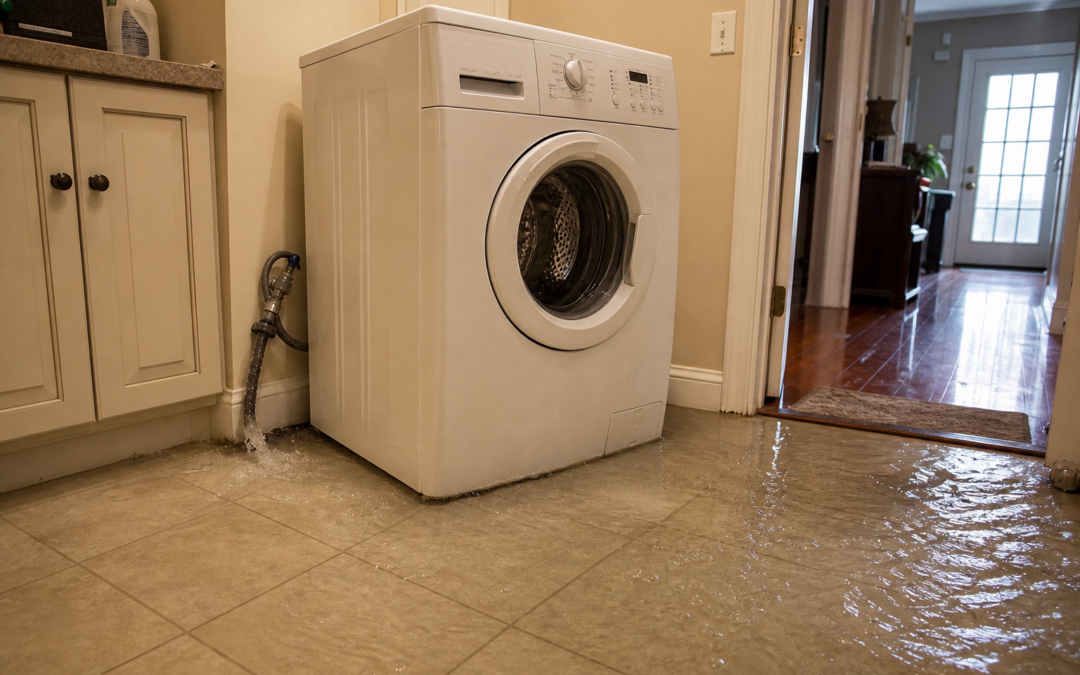
You throw in a load of laundry, walk away, and come back to an inch of water spreading across your laundry room floor, into the hallway, and soaking under every wall it can reach.
A washing machine flood is one of the most common — and most destructive — sources of water damage in residential homes. And it happens more often than you’d think. Insurance industry data shows that washing machine failures cause an average of $5,300 in damage per incident, and a burst supply line can release up to 650 gallons of water per hour.
That’s not a puddle. That’s a flood.
Whether your washer just overflowed, a hose burst while you were at work, or you’re dealing with a slow leak that’s been quietly soaking your floors for weeks — here’s exactly what to do and what to know.
The 3 Most Common Ways Washing Machines Cause Water Damage
Not every washing machine flood looks the same. Understanding what happened helps you respond correctly.
1. Supply line burst. This is the big one. The rubber or braided steel hoses that connect your washer to the hot and cold water supply are under constant pressure — even when the machine isn’t running. Over time, those hoses weaken, crack, or blow out entirely. When they go, water flows at full municipal pressure until someone shuts it off. If you’re not home, that can mean hours of uncontrolled flooding.
2. Drain hose failure. The drain hose carries dirty water from your washer to the standpipe or utility sink. If the hose comes loose, kinks, or the drain clogs, water backs up and overflows onto the floor during the spin cycle. It’s usually a smaller volume than a supply line burst, but it’s dirty water — which means contamination is a concern.
3. Internal leak or overflow. Worn door seals on front-loaders, cracked tubs, faulty water level switches, or overloading the machine can all cause water to overflow or leak from the unit itself. These leaks are often slow and intermittent, which makes them sneakier — water seeps under flooring and into subfloor materials for weeks before anyone notices.
What to Do in the First 10 Minutes
If you walk in to find your washing machine flooding, move fast. The first few minutes matter more than you think.
1. Shut off the water supply. Turn the hot and cold valves behind the washing machine clockwise until they stop. If you can’t reach them or they won’t turn, shut off your home’s main water supply. Every minute the water runs makes the damage worse.
2. Kill the power — safely. If water is near any electrical outlets, switches, or the washing machine’s plug, don’t step in the water to unplug it. Go to your breaker panel and turn off the circuit for the laundry room. Water and electricity are a deadly combination.
3. Stop the spread. Use towels, blankets, or anything absorbent to create barriers at doorways and transitions to other rooms. The goal isn’t to soak up all the water — it’s to keep it from spreading further while you deal with the source.
4. Move what you can. Get furniture, boxes, shoes, and anything sitting on the wet floor up and off the ground. The longer porous materials sit in water, the harder they are to save.
5. Call Revive at (720) 340-3499. Once the water is stopped and the power is safe, call us. We’ll walk you through next steps over the phone and get a crew to your home fast.
Why Washing Machine Floods Are Sneakier Than You Think
Here’s what catches most homeowners off guard: the water you can see is only part of the problem.
Water from a washing machine flood doesn’t just sit on your floor. It follows gravity, pressure, and capillary action into places you can’t see:
- Under flooring. Water wicks under laminate, hardwood, and vinyl plank flooring within minutes. The subfloor underneath — usually OSB or plywood — absorbs that water and begins to swell and weaken.
- Into wall cavities. If the flood reaches a wall, water wicks up into the drywall and insulation. We routinely find moisture 12-18 inches up inside walls that look completely dry on the surface.
- Through the floor into rooms below. If your laundry room is on the second floor or main level above a basement, water follows plumbing penetrations, HVAC chases, and gaps in the subfloor straight down to the level below. We’ve seen washing machine floods on the second floor cause ceiling collapses in the living room.
- Under cabinets and behind appliances. Water pools in the spaces you can’t see or reach without moving heavy fixtures.
This is why “I mopped it up and ran a fan” almost never works. You dried the surface. The water inside your walls, under your floors, and in your subfloor is still there — and it’s creating the perfect environment for mold.
When to Call a Pro vs. DIY
Let’s be honest — not every washing machine leak needs professional restoration. Here’s how to tell the difference:
You can probably handle it yourself if:
- The leak was small (a cup or two of water)
- You caught it within minutes
- Water stayed on a hard, sealed surface (tile, sealed concrete)
- Nothing soaked through to subfloor or walls
Call Revive when:
- Water spread beyond the laundry room
- The floor was wet for more than 30 minutes
- You have laminate, hardwood, or carpet that got wet
- Water reached walls, cabinets, or went to a lower level
- You smell anything musty in the days following
- The supply line burst while you were away
Here’s the hard truth: DIY drying after a significant washing machine flood almost always leads to mold. Mold can start growing in hidden, damp spaces within 24-48 hours in Colorado’s summer conditions. By the time you smell it, it’s already established.
Professional water damage restoration uses moisture meters to find trapped water, commercial dehumidifiers and air movers that are 10-20x more powerful than consumer equipment, and thermal imaging to see exactly where water traveled behind walls and under floors.
Preventing the Next Washing Machine Flood
Once you’ve dealt with the immediate crisis, take these steps to prevent a repeat:
- Replace rubber supply hoses with braided stainless steel. They cost about $20-30 at any hardware store and last significantly longer. Do it every 5 years regardless.
- Turn off supply valves when not in use. Get in the habit of shutting the hot and cold valves when you’re done doing laundry. It takes 5 seconds and eliminates the risk of a burst hose when you’re away.
- Install a water leak detector. A $20 sensor behind your washing machine can alert your phone the moment water hits the floor.
- Don’t overload the machine. Overloading causes imbalance, overflow, and extra strain on seals and hoses.
- Inspect hoses twice a year. Look for bulges, cracks, rust at the connections, or any signs of moisture. Replace immediately if you see anything.
Call Revive Before Calling Insurance
If your washing machine flood caused significant damage, you’ll likely want to file an insurance claim. Call us first. We document everything — where the water came from, how far it spread, what materials are affected — in a format your insurance adjuster expects. We work with insurance companies daily and can help you navigate the process so nothing gets missed.
Your laundry shouldn’t cost you your floors, your walls, or your peace of mind. If your washing machine just flooded, call Revive at (720) 340-3499 right now. We’re available 24/7 and we’ll be there fast.
Revive Restoration serves homeowners across Northern Colorado, including Johnstown, Loveland, Windsor, Fort Collins, and the broader Front Range. Call (720) 340-3499 for emergency water damage restoration — any time, day or night.