
A water heater leak might not seem like an emergency — until it is. That small puddle under the tank? It could be slowly destroying your flooring, subfloor, and drywall right now, and you might not even realize the extent of the damage until it’s too late.
Water heaters are one of the most common sources of serious water damage in Northern Colorado homes. They run constantly, they age quietly, and when they fail, the damage spreads fast — especially if the leak goes undetected for even a few days. In summer, when your water heater is working harder than usual and sediment builds up from increased use, failures spike.
Here’s how to spot a water heater leak, what to do immediately, and when it’s time to call in a restoration professional.
Signs Your Water Heater Is Leaking
Not every water heater failure is a dramatic burst. Many start with subtle signs that are easy to miss:
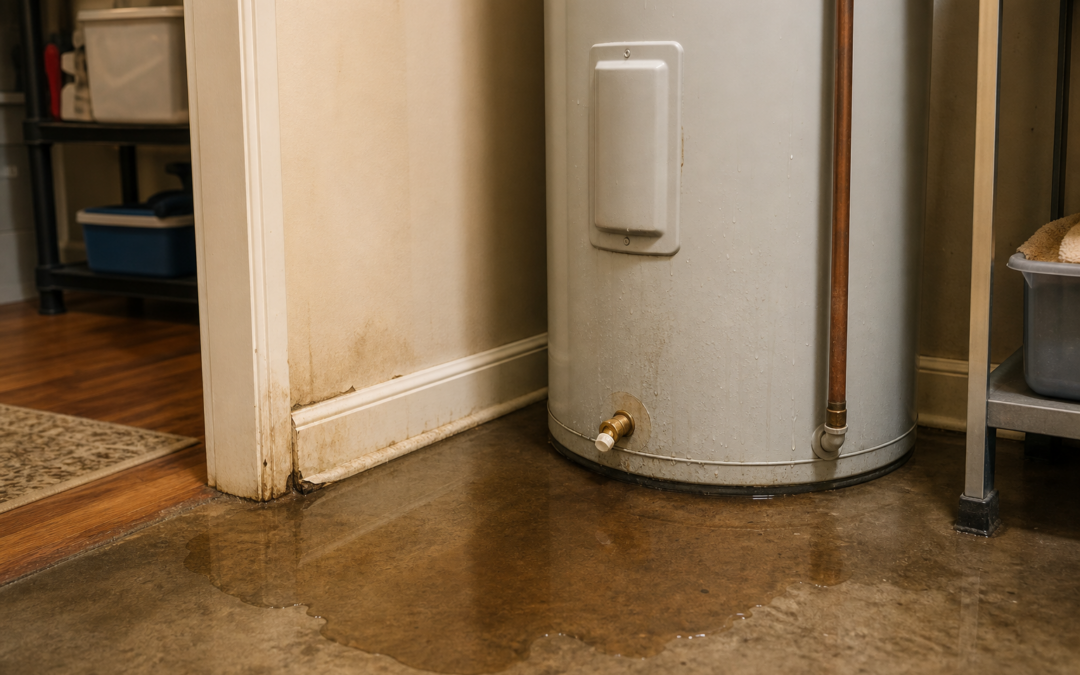
- Puddles or dampness around the base of the tank. Even a thin layer of water under your water heater is a warning sign. Check regularly — especially if your water heater is in a closet, garage, or unfinished basement where you don’t look often.
- Rust or corrosion on the tank. Visible rust on the outside of the tank, particularly near the bottom or around fittings, means the interior is deteriorating. Once a tank starts corroding, a failure is only a matter of time.
- The pressure relief valve is dripping. The T&P (temperature and pressure relief) valve on the side of your tank is a safety device. If it’s dripping or leaking, the tank may have excess pressure — a sign of a bigger problem brewing.
- A musty smell near the water heater. If you smell something musty or earthy around your water heater area, moisture may be collecting where you can’t see it. Mold can be growing behind walls or under flooring before the leak is even visible.
- Your water bill is higher than normal. An unexplained increase in your water bill can indicate a slow, persistent leak somewhere in your system — and the water heater is one of the first places to check.
- Warm or discolored spots on nearby flooring. If the floor near your water heater feels warm to the touch or shows discoloration, water may be seeping underneath and spreading.
How Fast Water Heater Damage Spreads
This is what catches most homeowners off guard. A water heater leak doesn’t stay in one place. Water follows gravity, seeps into every crack and gap, and wicks into porous materials like a sponge.
Here’s what happens on a typical timeline:
Within the first few hours: Water spreads across the floor and begins soaking into baseboards, drywall, and any nearby stored items. If your water heater is on an upper floor, water can travel through the subfloor and start damaging the ceiling below.
Within 24-48 hours: Drywall absorbs moisture and begins to swell and weaken. Subfloor materials — especially the OSB (oriented strand board) used in most Northern Colorado homes — start to swell and delaminate. Mold spores, which are always present in the air, land on wet surfaces and begin to colonize.
Within 3-7 days: Mold is actively growing. Wood framing can begin to warp. Flooring materials (laminate, hardwood, even tile underlayment) may be permanently damaged. The musty smell becomes noticeable. Remediation costs increase significantly with every passing day.
That “slow drip” under your water heater? It’s a hidden emergency.
What to Do Immediately If Your Water Heater Is Leaking
If you’ve discovered your water heater is leaking, act fast. Here’s your step-by-step response:
1. Turn off the water supply to the tank. There’s a cold water shut-off valve on the pipe feeding into the top of the water heater. Turn it clockwise to close it. If you can’t find it or it won’t turn, shut off the main water supply to the house.
2. Turn off the power to the water heater. For an electric water heater, go to your breaker panel and flip the breaker labeled for the water heater. For a gas water heater, turn the gas control valve to the “off” or “pilot” position. Do NOT turn off a gas valve if you smell gas — leave the house and call your gas company immediately.
3. Don’t try to move the water heater. A standard residential water heater holds 40-50 gallons of water and weighs several hundred pounds when full. Attempting to move it can cause further damage, break connections, or create a safety hazard.
4. Remove as much standing water as you can. Use towels, a mop, or a wet/dry vacuum if you have one. The faster you remove standing water, the less time it has to soak into your subfloor and walls.
5. Call Revive Restoration at (720) 340-3499. This is the most important step. Professional water extraction and drying equipment removes moisture that towels and household fans simply cannot reach. We use commercial dehumidifiers, air movers, and moisture detection tools to find and eliminate water in your walls, subfloor, and structural materials — the places where hidden damage and mold growth start.
6. Document everything for your insurance claim. Take photos and videos of the water heater, the visible damage, and the affected areas before any cleanup or repairs begin. This documentation is critical for your insurance claim.
Does Insurance Cover Water Heater Damage?
In most cases, yes — if the failure was sudden and accidental. A water heater that ruptures unexpectedly or has a supply line that bursts is typically covered under your standard homeowners policy. The insurance company will generally pay for water extraction, drying, structural repairs, and damaged personal property.
However, if the leak was slow and ongoing — if there’s evidence the water heater had been leaking for weeks or months before you noticed — your insurer may classify it as a maintenance issue and deny the claim. This is another reason to check your water heater regularly and act the moment you notice anything unusual.
Here’s the most important thing to know: call Revive before you call your insurance company. We document the damage professionally, begin mitigation immediately, and help you approach your claim from a position of strength. When your insurer sees that a certified restoration company responded quickly and documented everything, your claim is harder to deny or underpay.
Preventing Water Heater Failures
You can’t prevent every water heater failure, but you can significantly reduce the risk:
- Inspect the area around your water heater monthly. Look for puddles, rust, and dripping. It takes 30 seconds.
- Know the age of your water heater. Most tank water heaters last 8-12 years. If yours is approaching that range, be especially vigilant — or consider proactive replacement.
- Flush the tank annually. Sediment buildup is one of the leading causes of tank failure. A simple flush extends the life of your unit and reduces corrosion.
- Install a drain pan and water alarm. A drain pan under the tank catches small leaks. A water alarm (available at any hardware store) alerts you the moment moisture is detected. Together, they buy you time.
- Consider a water heater on the main floor carefully. If your water heater is on the second floor or in an attic space, a failure can cause catastrophic damage to multiple levels of your home. Extra monitoring is essential.
Don’t Wait — Every Hour Matters
A leaking water heater is not a problem that gets better with time. Every hour that water sits against your subfloor, drywall, and framing, the damage gets worse and the restoration gets more expensive. Mold doesn’t wait. Structural damage doesn’t pause.
Revive Restoration serves homeowners across Johnstown, Loveland, Windsor, Fort Collins, Greeley, and all of Northern Colorado. We respond within 60 minutes with professional-grade equipment, and we handle the documentation your insurance company needs.
If your water heater is leaking right now, call (720) 340-3499. We’ll get there fast — before the damage spreads.