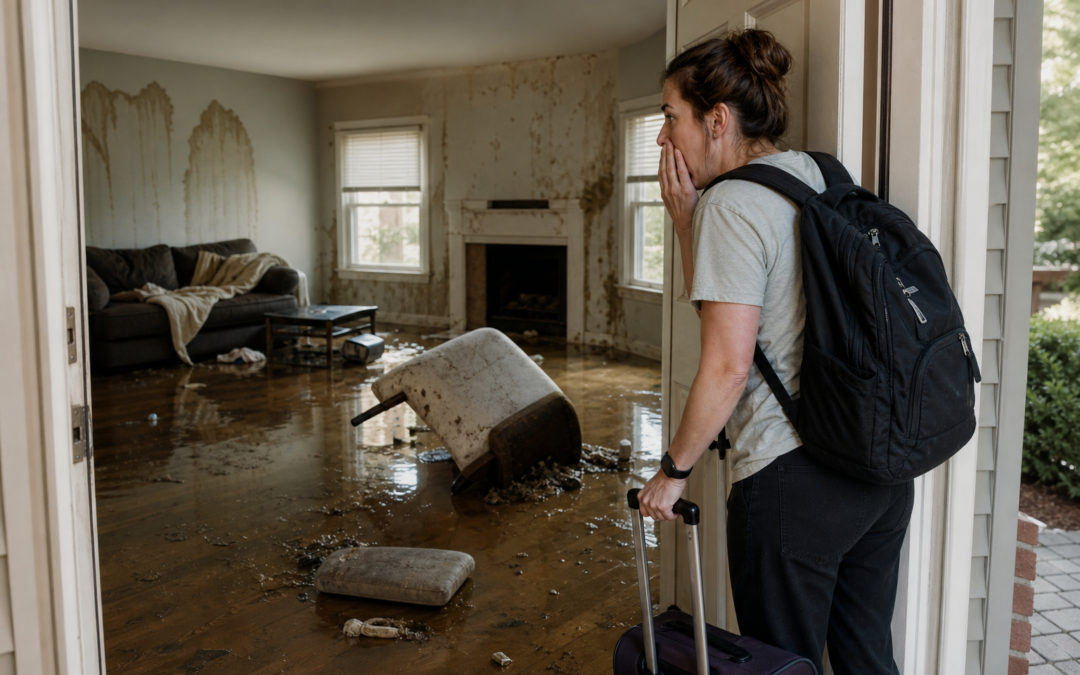
You’ve been away for a week — maybe two. You pull into the driveway, walk through the front door, and your stomach drops. There’s water. Everywhere. The smell hits you before you even see the full extent of it. A pipe burst, an appliance failed, or a slow leak turned catastrophic while no one was home to catch it.
This is one of the worst water damage scenarios a homeowner can face. When water damage goes undetected for days, the consequences are severe: deep structural saturation, widespread mold growth, and restoration costs that climb with every hour the water sat. It’s overwhelming — but what you do in the next few hours matters enormously.
If you just came home to water damage in your Northern Colorado home, here’s exactly what to do, what NOT to do, and how to protect your home and your insurance claim.
What Happens When Water Damage Goes Undetected for Days
When a pipe bursts or an appliance fails while you’re away, water doesn’t just pool on the floor — it spreads, soaks, and penetrates. Here’s what happens on a timeline:
Day 1-2: Water saturates flooring, drywall, baseboards, and carpet padding. It seeps through subfloors and can travel to lower levels of the home. Furniture and stored items in the affected area absorb moisture.
Day 3-5: Mold begins actively growing on wet surfaces. Drywall becomes soft and may start to crumble. Subfloor materials (plywood and OSB) swell, warp, and begin to delaminate. Wood framing starts absorbing moisture deep into the grain. The smell becomes unmistakable.
Day 6+: Mold colonies are established and spreading. Structural components are compromised. Hardwood floors cup, buckle, and may be unsalvageable. If the water source hasn’t been stopped, damage continues to expand into new areas of the home. Restoration becomes significantly more complex and extensive.
The difference between water damage discovered in hours versus water damage that sits for a week is enormous. But even in the worst cases, fast professional response from the moment you discover it makes a real difference.
The First 5 Steps to Take the Moment You Walk In
Take a breath. Then take these steps in order:
Step 1: Don’t walk through the standing water — especially near electrical outlets. If there’s significant standing water and you can see outlets, light switches, or appliances submerged or near the water line, do NOT walk through it. Water and electricity are a lethal combination. If possible, turn off the electrical breaker for the affected areas from a dry location. If you can’t do this safely, stay out and call for help.
Step 2: Stop the water source if you can safely reach it. If it’s a plumbing failure, shut off the main water valve. In most Northern Colorado homes, the main shut-off is near where the water line enters the house — often in the basement, crawl space, or near the water heater. Turn it clockwise to close.
Step 3: Call Revive Restoration at (720) 340-3499. This is urgent. When water has been sitting for days, every additional hour increases the damage. Revive responds within 60 minutes across Northern Colorado with commercial-grade water extraction, dehumidification, and drying equipment. We handle extended-exposure water damage regularly — the sooner we start, the more of your home we can save.
Step 4: Document everything before touching anything. This is critical for your insurance claim. Take photos and video of every room affected. Capture the water levels, the visible damage, the source if you can identify it, and any personal property that’s been damaged. Open closets and cabinets and document what’s inside. Photograph serial numbers on damaged electronics and appliances if possible.
Step 5: Open windows if the air outside is dry. Getting air circulation started helps, but don’t rely on it to solve the problem. Household fans and open windows cannot adequately dry structural materials that have been saturated for days. Professional drying equipment is essential.
What NOT to Do
In the panic of discovering a flooded home, people often make mistakes that hurt their recovery — and their insurance claim. Avoid these:
Don’t turn on your HVAC system. If there’s mold growth (likely after several days of water exposure), turning on the HVAC can spread mold spores throughout the entire house via the ductwork — including rooms that weren’t directly affected by the water. Leave it off until a restoration professional assesses the situation.
Don’t walk on wet subfloors if they feel soft or spongy. Subfloor materials that have been saturated for days may be structurally compromised. Walking on them risks injury and further damage.
Don’t throw away damaged items before documenting them. Your insurance company needs to see the damage. Photograph and catalog everything before removing it. If possible, set damaged items aside rather than disposing of them until your claim is documented.
Don’t try to handle this with fans and a wet/dry vacuum. After days of standing water, the moisture has penetrated deep into structural materials — subfloors, framing, insulation inside walls, and more. Consumer-grade equipment can’t reach it, and incomplete drying almost always leads to mold problems weeks later.
Don’t wait to call a professional because you want to “clean up first.” The restoration process starts with the water still present. Professional teams need to see the conditions to properly assess the scope and document the loss.
Does Insurance Cover Water Damage That Happened While You Were on Vacation?
Generally, yes — if the cause was sudden and accidental (like a burst pipe or appliance failure), your homeowners insurance should cover the damage even if you weren’t home when it happened.
However, there are factors that can affect your claim:
- Duration matters. If the water was running for a week or more, the insurer may scrutinize whether you took reasonable precautions before leaving. This doesn’t mean they’ll automatically deny the claim, but be prepared for questions.
- Maintenance history matters. If the failure was caused by a known issue you hadn’t addressed — a corroded pipe, a water heater past its lifespan, a faulty appliance — the insurer may argue the damage was preventable.
- Your response time after discovery matters. Insurance companies expect you to mitigate the damage as soon as you discover it. Calling a professional restoration company immediately demonstrates that you took responsible action. Waiting days after you get home gives the insurer ammunition to limit your payout.
Call Revive before you call your insurance company. We document the damage with professional equipment — moisture meters, thermal imaging, detailed photos — and begin mitigation immediately. This documentation supports your claim and shows your insurer that you responded appropriately. It’s the single best thing you can do to protect your payout.
How to Prevent Water Damage Before Your Next Vacation
You can’t eliminate the risk entirely, but these precautions dramatically reduce it:
- Shut off the main water supply before you leave. This is the single most effective prevention step. If the water is off, pipes can’t burst and appliances can’t overflow.
- If you can’t shut off the main water, shut off individual supply lines to washing machines, dishwashers, ice makers, and toilets.
- Turn down (but don’t turn off) your water heater. Set it to “vacation” mode if available, or lower the temperature. This reduces pressure on the tank while you’re away.
- Install a smart water leak sensor. Affordable sensors placed near water heaters, washing machines, and under sinks can send alerts to your phone the moment moisture is detected. Some can even automatically shut off your main water supply.
- Ask a neighbor or friend to check on your home every 2-3 days. A quick walkthrough can catch a problem early — before a slow leak becomes a catastrophic flood.
- Know where your main water shut-off valve is BEFORE you leave. Make sure everyone in the household knows its location, and test it to confirm it turns easily.
You’re Home. You’ve Seen the Damage. Now Act Fast.
We know this is overwhelming. Coming home to a flooded house feels like a nightmare, and the scope of the damage can be paralyzing. But the most important thing you can do right now is pick up the phone and call a professional.
Revive Restoration serves homeowners across Johnstown, Loveland, Windsor, Fort Collins, Greeley, and all of Northern Colorado. We handle extended-exposure water damage every week. We respond within 60 minutes, we work with every insurance carrier, and we’ll fight to save as much of your home as possible.
Call (720) 340-3499 right now. The sooner we start, the more we save.