You noticed something off. Maybe it’s a dark spot on the wall behind the bathroom vanity. Maybe it’s a musty smell in the basement that wasn’t there last month. Maybe you had a water leak a few weeks ago and now you’re wondering whether mold started growing while the walls were drying out.
The question you’re Googling right now is probably: “Do I actually need a mold test? Or can someone just come fix it?”
The honest answer? Possibly — and if you’re not sure, the best move is to call Revive and let us come take a look. We’ll review the damage, use special tools to check what’s happening behind the surfaces you can see, and order more in-depth mold tests when the situation calls for it. You don’t have to figure this out on your own.
Here’s what Northern Colorado homeowners should know about mold testing, when it makes sense, and when you might not need it at all.
When a Mold Test Is Worth It
A professional mold test — where air samples or surface samples are collected and sent to a lab — isn’t always necessary. But there are specific situations where it makes real sense:
- You smell mold but can’t see it. A musty, earthy smell is one of the most reliable indicators of hidden mold growth. If the smell is persistent but you can’t find the source, testing can confirm whether mold is present and help pinpoint where it’s hiding — behind walls, under flooring, or in HVAC ducts.
- You had water damage that wasn’t professionally dried. If your home experienced a leak, flood, or plumbing failure and the affected areas weren’t dried with commercial equipment within 24–48 hours, there’s a strong chance mold started growing. Testing can confirm the type and extent of growth.
- You’re buying or selling a home. A mold test provides documentation that protects both parties. For buyers, it reveals hidden issues. For sellers, a clean test removes a potential negotiation obstacle.
- Someone in the home is experiencing unexplained health symptoms. Persistent coughing, sneezing, headaches, or respiratory irritation — especially symptoms that improve when you leave the house — can be linked to mold exposure. Testing can help determine if your indoor air quality is compromised.
- You’re not sure what you’re looking at. Not every dark spot is mold. Mineral deposits, dirt staining, and discoloration from water can all look similar. If you’re uncertain, a professional assessment clears up the confusion.
When You Might Not Need a Separate Test
In some cases, testing isn’t the critical first step — action is:
- You can see visible mold growth. If there’s clearly mold growing on your walls, ceiling, or other surfaces, you already know you have a problem. A lab test will tell you the species, but it won’t change the fact that the mold needs to be removed. In these situations, we can move straight into assessment and remediation planning.
- During active water damage restoration. If Revive is already on-site restoring water damage and we discover mold growth during the process, we address it immediately as part of the remediation. Stopping to wait for test results in an active situation just gives the mold more time to spread.
That said, even when visible mold is present, there are cases where we’ll recommend testing — for instance, if we suspect the growth extends behind walls or into areas we can’t access visually, or if the type of mold matters for the remediation approach.
What Actually Happens During a Mold Inspection
When you call Revive and ask us to check for mold, here’s what the process looks like:
- Visual inspection: We look at every area of concern — and areas you might not have thought to check. Mold loves dark, humid, undisturbed spaces: behind appliances, inside closets on exterior walls, in crawl spaces, around windows, and in any area that’s had previous water exposure.
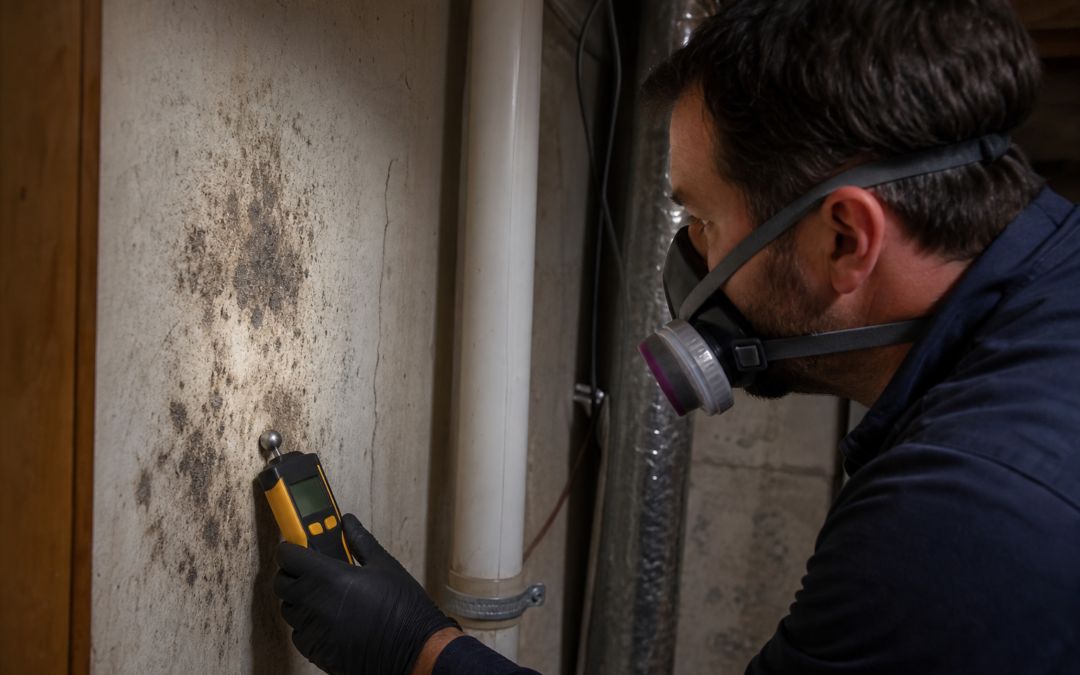
- Moisture detection with special tools: We use professional moisture meters and thermal imaging cameras to detect moisture behind walls, under floors, and in ceilings without tearing anything apart. Mold needs moisture to grow, so finding hidden moisture often leads us directly to hidden mold. These aren’t tools you’ll find at the hardware store — they let us see what’s happening inside your walls without cutting into them.
- Air and surface sampling (when warranted): If the inspection reveals conditions that suggest hidden mold or if we need to determine the specific type and concentration of mold present, we can order in-depth mold tests. Samples are sent to an accredited lab and results typically come back within a few business days.
- Honest assessment: After the inspection, we’ll tell you exactly what we found. If there’s no mold, we’ll tell you that. If there’s a small amount that’s easy to address, we’ll tell you that too. And if there’s a bigger problem, we’ll lay out the options clearly so you can make an informed decision.
Red Flags: Contractors Who Push Unnecessary Testing
Here’s something worth knowing: some companies use mold testing as a revenue tool rather than a diagnostic one. Watch out for these red flags:
- A company that insists on expensive testing before they’ll even look at the problem. A reputable restoration company will do a visual inspection and moisture assessment first — testing should be recommended based on what we find, not as a blanket requirement.
- “Testing packages” sold at inflated prices. If someone’s trying to sell you a multi-room testing package before they’ve even seen the property, they may be more interested in the testing fee than in solving your problem.
- A company that does both testing and remediation with no third-party verification. In some situations (like real estate transactions or insurance claims), it’s best to have testing done by an independent party to avoid any conflict of interest. Revive can refer you to independent testing labs when that’s the right move.
Visual Mold vs. Hidden Mold — How to Tell If You Need a Professional
As a homeowner, here’s a simple framework:
You’re probably looking at a surface issue if:
- The mold is on a bathroom ceiling or grout line
- It appeared in an area with poor ventilation (windowless bathroom, basement corner)
- There’s no history of water damage in that area
- The affected area is smaller than about 10 square feet
You probably need a professional assessment if:
- You smell mold but can’t find it
- There’s mold on drywall (which means it may be growing on the backside too)
- You’ve had water damage, a leak, or flooding in the past
- The affected area is larger than 10 square feet or spans multiple surfaces
- Anyone in the home is experiencing allergy-like symptoms
- You’re seeing mold in multiple rooms — which suggests a moisture source you haven’t found
If you’re unsure, that’s exactly when to call. You don’t need to diagnose the problem yourself — that’s what we’re here for.
How Revive Handles Mold Found During Water Damage Restoration
A large percentage of the mold problems we see in Northern Colorado are connected to water damage — either an active event or one that happened weeks or months ago and was never fully dried.
When Revive is on-site for water damage restoration, our team is trained to watch for signs of mold at every stage:
- During tear-out: When we remove water-damaged drywall, flooring, or insulation, we inspect the backside and the cavities behind them. If mold is present, we document it and include remediation in the restoration scope.
- During drying: We monitor moisture levels throughout the drying process to make sure materials reach safe levels. If areas aren’t drying properly — which could indicate trapped moisture — we investigate further.
- Post-restoration: Before we button everything back up, we verify that the environment is dry, clean, and safe. If additional mold testing is warranted, we’ll recommend it and coordinate with the lab.
Not Sure? Call Revive — We’ll Come Take a Look
Here’s the bottom line: if you think you might have a mold problem, call us. Even if you’re not sure. Even if it turns out to be nothing.
Revive Restoration will come to your home, review the damage, and use our professional tools to figure out what’s going on. If you need more in-depth mold tests, we can order them. If you don’t, we’ll tell you that too.
There’s no cost for the initial assessment and no pressure to commit to anything. We’d rather check it out and give you peace of mind than have you wait while mold spreads behind a wall you can’t see.
Call Revive Restoration at (720) 340-3499 — 24/7 across Northern Colorado. We serve Johnstown, Loveland, Windsor, Fort Collins, Greeley, Longmont, and communities throughout the Front Range.
Call Revive before calling insurance. And definitely call before mold has time to grow.