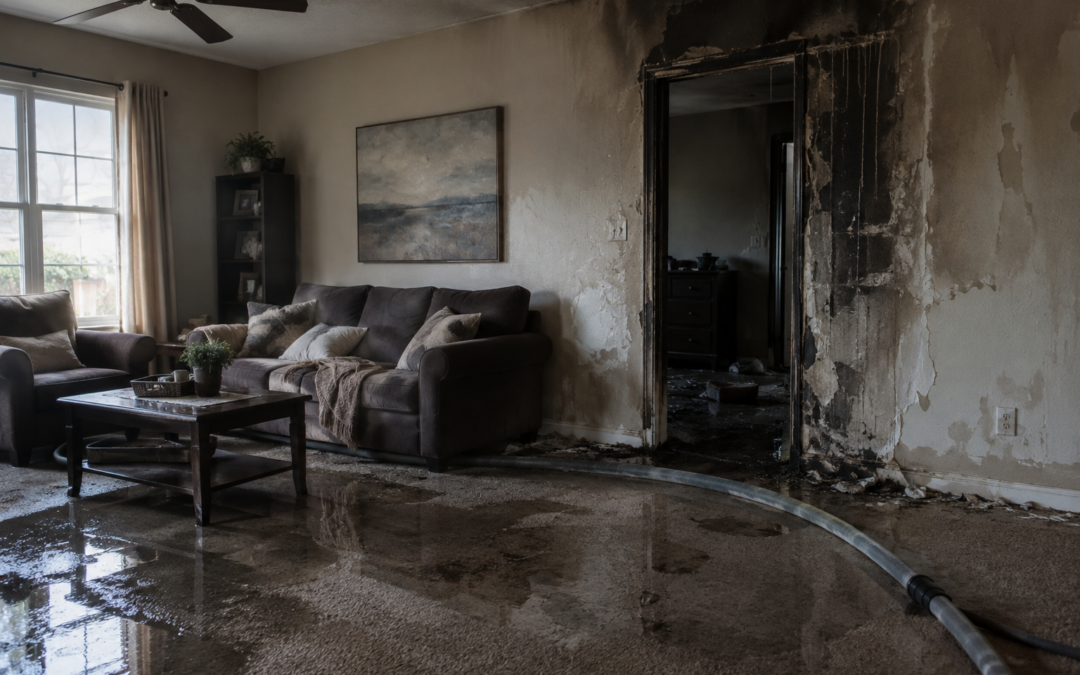
Heating season is when home fires peak. Space heaters, fireplaces, holiday candles and overloaded cords all play a part. When a fire happens, everyone rightly focuses on getting out safely and on the damage from the flames and smoke. What many homeowners don’t expect is how much water is left behind.
Fire hoses can put hundreds of gallons of water a minute into a home, and a single fire sprinkler head can release a lot of water before it’s shut off. That water doesn’t leave when the fire trucks do. It soaks into floors, walls, insulation and the rooms below. Left alone, it causes its own round of damage, including mold. Here’s what to know in the first 24 to 48 hours.
Why Water Damage After a Fire Is Its Own Problem
- Water travels. Water sprayed on an upstairs fire runs down through ceilings, light fixtures and wall cavities into rooms the fire never touched, and often into the basement.
- Heat plus moisture speeds up mold. A damp home that’s closed up after a fire, with the furnace off or windows boarded, is an ideal place for mold. It can start growing within 24 to 48 hours. Read more about how fast mold grows after water damage.
- Freezing makes it worse. In a Colorado winter, a home without heat can freeze, and wet materials and pipes can crack. See our guide to water damage during a Colorado winter.
- Hidden moisture. Subfloors, insulation and the backs of cabinets can stay wet long after surfaces feel dry. You need moisture meters to know for sure.
The First 24 to 48 Hours After a Fire
- Wait until the fire department says it’s safe to go back in. Fire can weaken floors and ceilings, and soaked drywall ceilings can collapse.
- Make sure the power is off in any wet areas. Water and electrical systems are a dangerous mix. Read our water damage electrical safety guide before you touch anything.
- Shut off the water if a sprinkler head, pipe or fixture was damaged and is still leaking.
- Document everything. Take photos and video of every room, including the ones with only water damage. Our guide on how to document water damage for an insurance claim has a checklist.
- Get the water out and the drying started quickly. Standing water, soaked carpet and wet drywall need professional extraction and drying with commercial dehumidifiers and air movers. The sooner it starts, the more of your home can be saved.
- Protect the house from the weather. Openings in the roof or windows need to be covered so snow and rain don’t add to the water damage.
Fire Sprinkler Discharges Without a Fire
Not every sprinkler discharge comes from a real fire. In homes, condos and businesses, frozen sprinkler lines, a bumped sprinkler head or a system fault can flood a space with no flames at all. If you have a fire sprinkler system, find out where its shutoff is now, before you need it. For multi-unit buildings, our guide on apartment and condo water damage responsibility explains who usually handles what, and business owners should read about commercial water damage restoration.
What Can Be Saved, and What Usually Can’t
Every home is different, but in general:
- Often salvageable: framing, many hardwood floors if drying starts fast (see our hardwood floor water damage guide), concrete, and many contents that can be cleaned and dried.
- Often replaced: soaked carpet pad, wet insulation, swollen particleboard cabinets and drywall that stayed wet too long or holds contaminated water.
A professional moisture assessment tells you exactly where the water went, so you don’t tear out more than you need to or leave hidden moisture behind.
Insurance Basics After a Fire
Most homeowners policies treat water used to put out a covered fire as part of the fire loss. Policies vary, though, so read yours carefully and ask your agent about anything that’s unclear. Keep receipts for emergency costs like board-up, tarps and temporary housing, and don’t throw away damaged items until your adjuster has seen them or approved it. If you run into problems, our post on what to do if a water damage claim is denied may help. This is general information, not legal or insurance advice.
Call Revive Before You Call Insurance
After a fire, you’ll have a lot of calls to make. Make one of the first ones to us. We’ll come out for a free inspection, map where the firefighting or sprinkler water went with moisture meters, and start extraction and drying to stop mold before it starts. Having a clear picture of the water damage before you file helps you have a better conversation with your adjuster.
Revive Restoration is an IICRC-certified firm that handles water damage restoration across Northern Colorado, 24 hours a day. Call us at (720) 340-3499 or visit our 24/7 emergency page. You’ve been through enough. Let us help with the water.
Frequently Asked Questions
How much water does it take to put out a house fire?
It varies with the size of the fire, but fire hoses can deliver hundreds of gallons of water per minute. Even a small kitchen or bedroom fire can leave enough water to soak floors, walls and the rooms below.
Can water damage from firefighting cause mold?
Yes. A wet home that’s closed up after a fire is an ideal environment for mold, which can start growing within 24 to 48 hours. Fast water extraction and professional drying are the best way to prevent it.
Does homeowners insurance cover water damage from putting out a fire?
In most policies, water used to put out a covered fire is treated as part of the fire loss, but every policy is different. Review your policy, document all damage and keep receipts for emergency costs. This is general information, not insurance advice.
What should I do if a fire sprinkler goes off in my home or business?
Shut off the sprinkler system’s water supply if it’s safe to do so, turn off power to wet areas, take photos and call for water extraction right away. Frozen lines and damaged sprinkler heads can flood a space even when there’s no fire.
Who should I call about water damage after a fire in Northern Colorado?
Call Revive Restoration at (720) 340-3499 before you call insurance. We offer free inspections and 24/7 water extraction, drying and mold prevention throughout Northern Colorado.
Serving all of Northern Colorado: Revive Restoration responds across Fort Collins, Loveland, Windsor, Johnstown, Greeley, Longmont, Timnath, Berthoud, Wellington, Severance, Erie, and every community on our service areas map. Learn more about our water damage restoration and mold remediation services, see how our restoration process works, or request a free inspection.