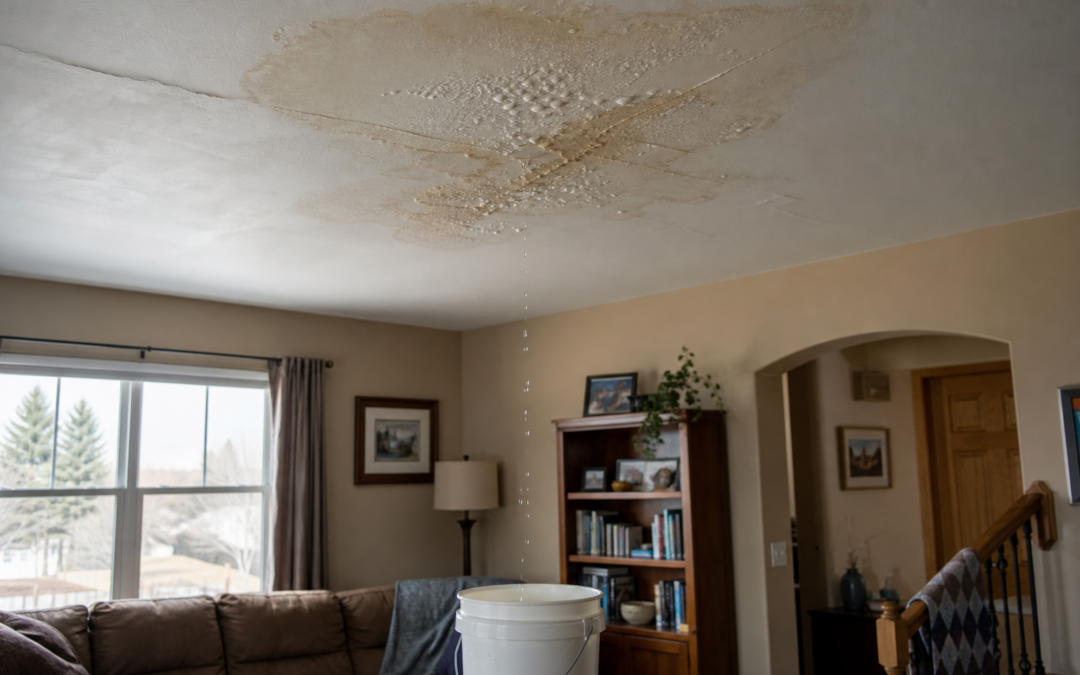
A small roof leak might not seem like an emergency — until you notice the ceiling sagging, paint bubbling, or a musty smell spreading through the hallway. Here in Northern Colorado, between summer hailstorms, monsoon-season downpours, and the freeze-thaw cycles that loosen flashing all winter long, roof leaks are one of the most common ways water sneaks into your home and starts doing serious damage.
The truth is, water from a roof leak doesn’t just drip down and sit there. It travels — along rafters, behind drywall, through insulation — and it works fast. What starts as a tiny stain on your ceiling can turn into structural damage and mold growth within 24 to 48 hours.
If you’re dealing with a roof leak right now, keep reading. We’ll walk you through exactly what’s happening inside your home and what to do to protect it.
How a Roof Leak Becomes a Major Water Damage Event
Most homeowners think of a roof leak as a roofing problem. And yes, the source needs to be fixed. But the real danger is what happens once water gets past your shingles and into the structure of your home.
Here’s the typical timeline:
- Within hours: Water soaks into attic insulation, reducing its effectiveness and adding weight to your ceiling joists. Drywall begins absorbing moisture, and you might see discoloration forming overhead.
- Within 24 hours: Water wicks through drywall and into wall cavities below. Paint starts peeling or bubbling. Wooden framing begins to swell. If the leak is significant, water may pool on top of drywall and cause visible sagging.
- Within 48–72 hours: Mold spores — which are already present in every home — begin colonizing damp materials. Once mold takes hold, you’re no longer dealing with just water damage. You’ve got a mold remediation issue on top of everything else.
The longer a roof leak goes unaddressed, the more expensive and invasive the restoration becomes. That’s why acting fast matters more than almost anything else.
Where Roof Leak Damage Hides
One of the trickiest things about roof leak water damage is that you often can’t see the worst of it. The stain on your ceiling? That’s just the tip of the iceberg.
Here’s where we typically find hidden damage during roof leak restoration:
- Attic insulation: Fiberglass and blown-in insulation absorb water like a sponge and lose their insulating value. Wet insulation also creates a perfect environment for mold. In many cases, it needs to be removed and replaced entirely.
- Ceiling joists and rafters: Prolonged moisture exposure causes wood rot, which weakens the structural members holding up your roof. We’ve seen homes where the wood was so soft you could press a finger into it.
- Drywall — on both sides: The stain you see on the ceiling surface is just one side of the story. The backside of the drywall, which you can’t see, is often soaked through and growing mold.
- Interior walls: Water follows gravity, but it also follows pathways. It can travel down wall cavities and pool at the base of walls, damaging flooring, baseboards, and lower drywall — sometimes an entire floor below the actual leak.
- Electrical wiring: Water and electricity are a dangerous combination. If water reaches junction boxes, light fixtures, or wiring inside your walls or ceiling, it’s a safety hazard that needs professional evaluation.
What to Do Immediately If You Discover a Roof Leak
When you spot the first signs of a roof leak — a stain, a drip, a musty smell — here’s what to do right away:
- Contain the water. Place a bucket or container under active drips. If the ceiling is bulging, you can carefully puncture it with a small hole to release pooling water in a controlled way (this prevents a sudden ceiling collapse).
- Move belongings. Get furniture, electronics, and personal items out of the affected area. Water doesn’t just damage structure — it ruins personal property fast.
- Document everything. Take photos and videos of every area you can see damage. This will be critical for your insurance claim.
- Call Revive before calling insurance. This is the most important step. Having a restoration professional on-site before you file your claim means we can help you document the full scope of damage, prevent further loss, and make sure nothing gets missed. Insurance adjusters respond better when the damage is professionally documented.
- If safe, tarp the roof. If you can safely access the area and the storm has passed, placing a tarp over the leak source can prevent additional water from entering. But don’t risk your safety — leave it for a professional if the roof is steep, wet, or damaged.
Roof Leak vs. Structural Water Damage — What a Restoration Company Handles vs. a Roofer
Here’s where homeowners sometimes get confused: a roofer fixes the source of the leak (the shingles, flashing, or underlayment), but a water damage restoration company handles everything the water touched once it got inside.
A roofer handles:
- Replacing damaged shingles or flashing
- Patching the roof deck
- Preventing future leaks at the source
Revive Restoration handles:
- Extracting standing water
- Drying out insulation, drywall, framing, and cavities with commercial-grade dehumidifiers and air movers
- Removing water-damaged materials (wet insulation, saturated drywall, warped trim)
- Mold inspection and remediation if growth has started
- Full restoration — rebuilding what was damaged so your home looks and feels like it did before
In most roof leak situations, you’ll need both a roofer and a restoration company. The key is calling the restoration team first, because stopping the water damage from spreading is more urgent than the roof repair itself. A tarp handles the roof temporarily — but nothing slows down mold growth except professional drying.
Why Roof Leaks Are Especially Common in Northern Colorado
Living along the Front Range means your roof takes a beating year-round:
- Summer hailstorms: Colorado is one of the most hail-prone states in the country, and Northern Colorado — from Johnstown to Fort Collins — sees severe hail nearly every summer. Even small hail can crack shingles and compromise the seal of your roof.
- Monsoon-season rain: July and August bring heavy afternoon downpours that can overwhelm an already-weakened roof.
- Freeze-thaw cycles: Winter temperatures in Loveland, Windsor, and the surrounding areas swing above and below freezing constantly, causing ice dams that push water underneath shingles.
- Aging roofs: Many NOCO homes were built in the 2000s housing boom, and their original roofs are now 20+ years old — right in the danger zone for failure.
If your roof has been through a few hailstorms and you haven’t had it inspected recently, a small leak could already be developing without you knowing it.
Don’t Wait — Call Revive Restoration
Water from a roof leak doesn’t take days off. Every hour it sits in your insulation, your drywall, or your wall cavities, the damage gets worse and the restoration gets bigger.
Call Revive Restoration at (720) 340-3499. We respond within 60 minutes across Northern Colorado — from Johnstown and Loveland to Windsor, Greeley, and Fort Collins. We’ll assess the damage, start drying immediately, and help you navigate the insurance process from day one.
Call Revive before calling insurance. We’re here to make this easier.