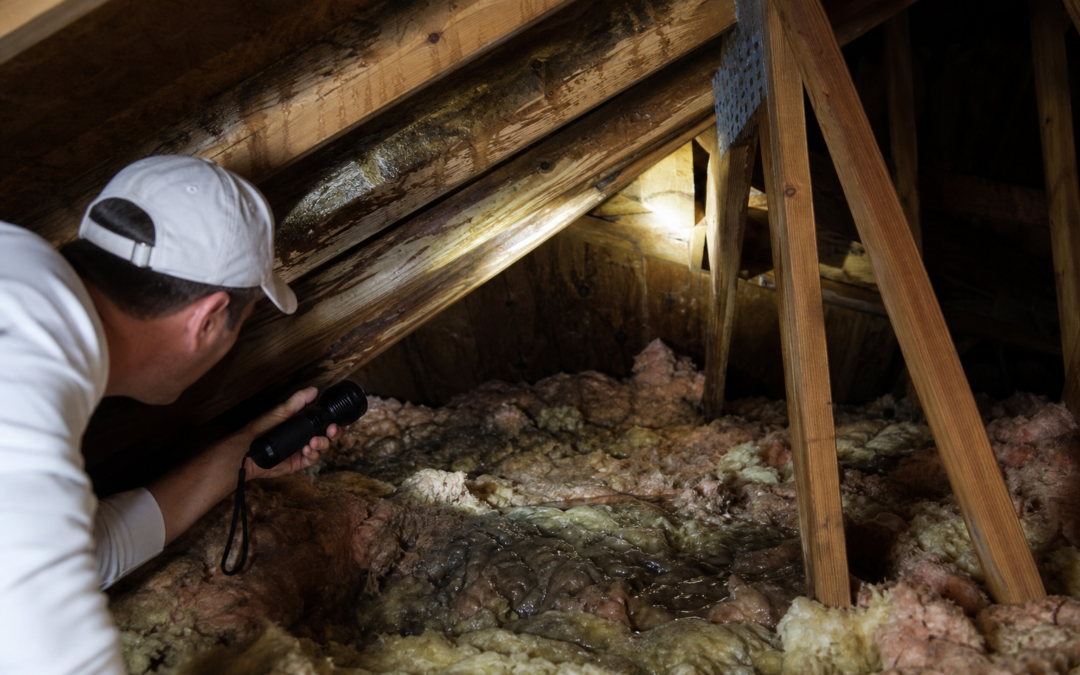
Attic water damage is the quietest kind of water damage there is. There is no puddle in the hallway, no soaked carpet, no dramatic moment. There is just insulation slowly holding moisture in a space nobody visits, until one day a yellow ring appears on a bedroom ceiling — and by then the problem is weeks or months old.
If you have seen a ceiling stain, smelled something musty upstairs, or gone up after a storm and found wet insulation, call Revive Restoration at (720) 340-3499. Free inspection, 24/7, and we will tell you honestly how far it has gone.
Why attic damage hides so well
Fiberglass and blown-in insulation act like a sponge. They absorb moisture, hold it against your roof decking and framing, and stop it from dripping through where you would notice it. Meanwhile the attic is dark, poorly ventilated in the wrong conditions, and warm enough in summer to be a nearly ideal environment for mold growth.
By the time water reaches the drywall below and shows up as a stain, it has usually already saturated insulation, wet the framing, and been sitting long enough for microbial growth to start.
What causes attic water damage in Northern Colorado
- Failed roof flashing. Around chimneys, vent stacks, skylights, and where roof planes meet. Flashing is the single most common leak point on a roof, and hail-driven wind is hard on it.
- Storm and hail damage. A hailstorm can bruise or crack shingles without knocking them off. The roof looks fine from the driveway and leaks quietly for the rest of the season. Our hail damage guide covers this in more detail.
- Ice dam aftermath. Northern Colorado freeze-thaw cycles push meltwater up under shingles. The damage happens in winter and shows up in spring.
- HVAC condensation. Attic-mounted air handlers, uninsulated ductwork, and clogged condensate lines drip steadily all summer. This one surprises people because it has nothing to do with the roof.
- Bathroom and dryer vents terminating in the attic. More common than it should be. Every hot shower pumps humid air straight into your insulation.
- Inadequate attic ventilation. Without proper intake and exhaust, moist air condenses on the underside of your roof deck. Homeowners often find dark staining on the sheathing with no leak at all.
Signs you have attic water damage
- Yellow, brown, or ringed stains on upper-floor ceilings — especially near exterior walls
- A musty or earthy smell upstairs, in closets, or coming from the attic hatch
- Insulation that looks flattened, darkened, or matted instead of fluffy
- Dark streaking or spotting on roof decking and rafters
- Rusted nail heads or fasteners visible from inside the attic
- Sagging or spongy drywall on the ceiling below
- Peeling paint at the top of walls
- Unexplained spikes in cooling or heating costs — wet insulation loses most of its R-value
What happens if you wait
This is the part homeowners underestimate. Attic mold remediation is one of the more involved jobs in restoration. It usually means containment, full removal and disposal of contaminated insulation, HEPA filtration, antimicrobial treatment of the decking and framing, and then re-insulating the whole attic. Left long enough, saturated sheathing and rafters can lose structural integrity and require carpentry.
Caught early, the same problem is often a targeted repair, a partial insulation replacement, and a few days of drying. The gap between those two outcomes is measured in weeks, not years.
What Revive does about it
We start with a full moisture inspection — thermal imaging from below, direct readings in the attic, and tracing the water back to its actual source rather than the spot where it appeared. Then we contain the area so nothing spreads into your living space, remove and dispose of unsalvageable insulation, dry the structure with commercial equipment and log the readings daily, treat affected surfaces, and coordinate the roof repair and re-insulation so the fix holds.
We also document everything for your insurance claim. Attic losses often involve both a roofing component and a water component, and adjusters ask precise questions about which is which. Having a restoration company’s moisture data in hand from day one makes those conversations go a lot better.
One important tip: call us before you call insurance
It feels backwards, but it works. Once we have inspected, mapped the moisture, and written a scope, you are calling your insurer with facts rather than a guess. That protects the value of your claim and keeps the process moving. There is no cost for the inspection either way.
Do not go up there and start pulling insulation
Wet attic insulation can be contaminated, the footing between joists is unforgiving, and there may be live wiring in the area you are reaching into. Take a photo from the hatch if you can do it safely, then stop.
Found ceiling stains or wet insulation? Call Revive Restoration at (720) 340-3499 — free inspection, 24/7 response across Northern Colorado, before it becomes a mold problem.