Most water damage we’re called to in Northern Colorado didn’t start with a flood. It started with a slow drip under a sink, a water heater that finally gave out, or a washing machine hose that split while everyone was at work. By the time someone noticed, the water had been running for hours or even days.
That’s the problem smart water leak detectors and automatic water shutoff valves are built to solve. They’ve become much more affordable and easier to install, and more homeowners across Johnstown, Loveland, Windsor, Fort Collins and the Front Range are asking us whether they’re worth it.
Short answer: for most homes, yes. But it helps to know what they do well, where to put them, and what they can’t catch.
How Smart Leak Detectors Work
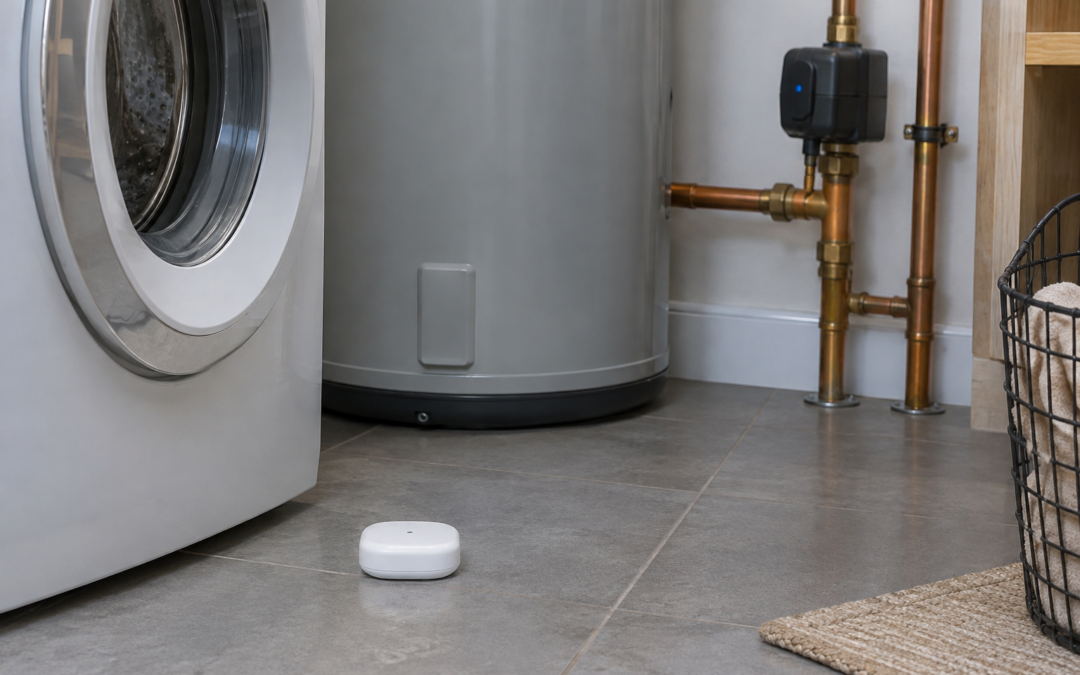
A smart leak detector is a small sensor that sits on the floor where a leak is likely. When water touches its metal contacts, it:
- Sounds a loud local alarm
- Sends an alert to your phone over Wi-Fi or through a smart home hub
- On many models, also warns you about freezing temperatures or high humidity
Some come with a cable sensor that can run along a wall or around a water heater to cover a wider area than a single puck.
How Automatic Shutoff Valves Work
An automatic shutoff valve goes on your main water line, usually right after the main shutoff. It can stop the water to the whole house by itself. There are two main types:
- Sensor-triggered valves close when a paired leak sensor gets wet anywhere in the house.
- Flow-monitoring valves watch how much water is moving through the pipe. If they see unusual flow, like water running nonstop for hours or a sudden surge from a burst pipe, they shut off the water even if no sensor got wet. Many can also spot tiny drips and running toilets.
Most let you shut off the water from your phone, which is a big deal when you’re out of town and get an alert.
Where to Put Leak Sensors First
If you’re starting with a few sensors, put them where we see the most water damage:
- Next to the water heater. Tanks eventually fail, often from the bottom, and usually in a basement or closet nobody visits.
- Behind or beside the washing machine. Burst supply hoses are one of the most common causes of big indoor floods.
- Under the kitchen sink and dishwasher. Slow drips here rot cabinets and subfloors without anyone noticing.
- Under bathroom sinks and behind toilets, especially upstairs bathrooms where a leak soaks the ceiling below.
- Next to the furnace and any condensate pump. High-efficiency furnaces make water, and those drain lines clog.
- Behind the refrigerator, if it has an ice maker or water dispenser line.
- By the sump pump or floor drain in the basement.
For homes that sit empty part of the year, or homes with a finished basement, an automatic shutoff valve on the main line gives you the most protection.
What They Can’t Catch
Leak detectors are a great early warning, but they aren’t a force field. Know their limits:
- Leaks inside walls and ceilings. A pinhole leak in a pipe inside a wall may never reach a floor sensor. A flow-monitoring shutoff valve has a better chance of catching it.
- Roof leaks and ice dams. Water coming in from outside doesn’t flow through your plumbing, so a shutoff valve can’t stop it, and floor sensors only catch it if it drips right onto them.
- Groundwater and storm flooding. Sensors will warn you, but they can’t stop water coming through foundation walls or window wells.
- Sewer backups. These come up through floor drains from the city line.
- Dead batteries and lost Wi-Fi. Test your sensors a couple of times a year, and replace batteries when the app tells you to.
Do Insurance Companies Offer Discounts?
Some homeowners insurance companies offer a discount, or even a free device, for installing leak detection or an automatic water shutoff system. Whether you qualify depends on your carrier and the type of device. Call your agent and ask before you buy, since some insurers only count certain systems or professionally installed valves.
Are They Worth It?
For most homeowners, yes. Basic leak sensors are inexpensive and take minutes to set up, and a single caught leak can save you from tearing out flooring, drywall and cabinets. Automatic shutoff valves cost more and usually need a plumber to install, but they’re especially worth it if you:
- Travel often or spend the winter somewhere else
- Have a finished basement
- Have an older water heater or older plumbing
- Own a rental or vacation property
- Have already had a water damage claim
What to Do When a Leak Sensor Goes Off
- Shut off the water. Use the app, the valve at the fixture, or your main shutoff.
- Find the source and take photos and video before you clean anything up.
- Check around and below the leak. Look at the cabinet floor, nearby baseboards and the ceiling underneath.
- Don’t assume it’s fine because it’s dry on top. Water spreads under flooring and up into drywall. If the leak ran for more than a few minutes, get the moisture checked.
- Call Revive before you call your insurance company.
Call Revive Before You Call Insurance
A leak detector buys you time. What you do next decides how much damage you end up with. Call Revive first and we’ll use moisture meters and thermal imaging to find out whether the water spread under the floor or into the walls, dry it properly, and document it all for your adjuster. We work with every insurance carrier, and the inspection is free.
Revive Restoration is family-owned and based in Johnstown, and we’ve been restoring Front Range homes since 2016. We answer 24/7.
Leak alarm going off? Call Revive Restoration at (720) 340-3499 before you call your insurance company.
Smart Leak Detector FAQs
Are smart water leak detectors worth it?
For most homes, yes. They’re inexpensive and easy to set up, and catching one leak early can prevent major damage to floors, walls and cabinets. They’re especially valuable near water heaters, washing machines and sinks, and in homes that sit empty while you travel.
Where should I put water leak sensors in my house?
Start with the water heater, the washing machine, under the kitchen sink and dishwasher, under bathroom sinks and behind toilets, next to the furnace, behind the refrigerator and near the sump pump. Those are the spots where most indoor water damage starts.
What’s the difference between a leak detector and an automatic shutoff valve?
A leak detector alerts you when it senses water. An automatic shutoff valve is installed on your main water line and can actually stop the water to the whole house, either when a paired sensor gets wet or when it detects abnormal water flow.
Will my insurance company give me a discount for a leak detector?
Some insurers offer discounts or free devices for leak detection or automatic shutoff systems, but it depends on your carrier and the type of system. Ask your agent before you buy so you choose a device that qualifies.
My leak sensor went off. Do I need a restoration company?
If you caught it in seconds and only the surface got wet, you may be fine after drying it up. If the leak may have run for a while, or water got under flooring, into a cabinet or into a wall, call Revive at (720) 340-3499 for a free moisture inspection before you call your insurance company.
Related reading: water heater leaks, washing machine floods, and signs of a hidden leak behind your walls.
Serving All of Northern Colorado
We handle water damage from appliance and plumbing leaks in Johnstown, Windsor, Loveland, Fort Collins, Greeley, Timnath, Severance, Longmont, Firestone, and Brighton. See every community we serve on our service areas page, or learn more about our water damage restoration and mold remediation services.