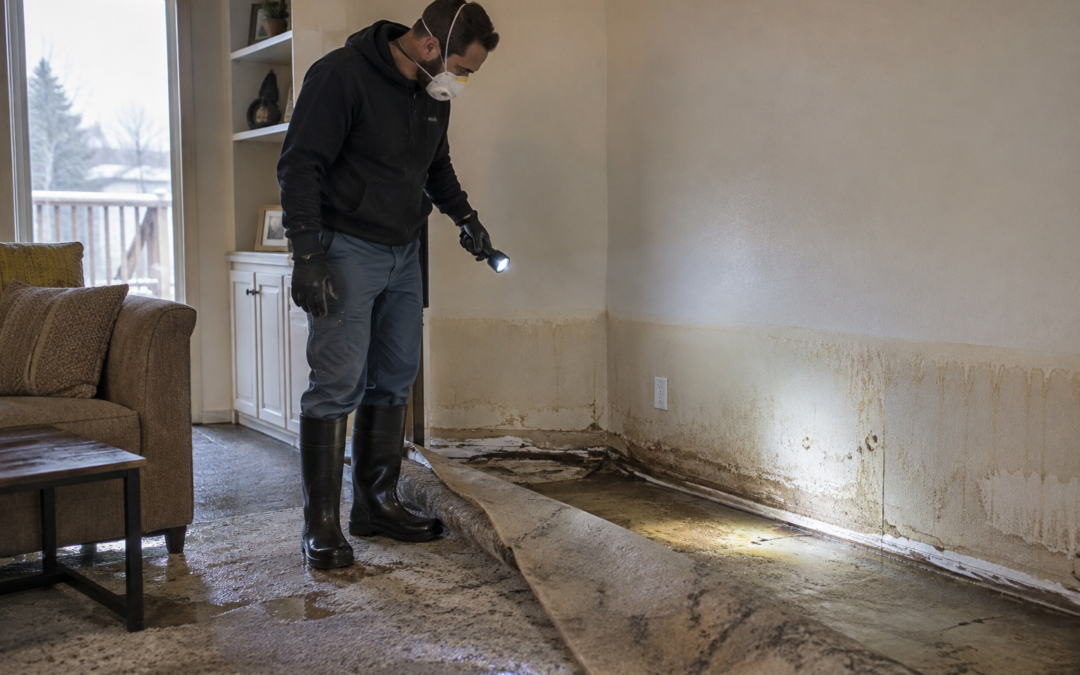
The water is going down, the roads are opening back up, and you want to get into your house and start fixing things. That instinct is completely normal. But the days right after a flood are when a lot of injuries happen, and when a lot of well-meaning DIY cleanup quietly turns into a mold problem months later.
Here’s how to get back into your home safely, what you can reasonably handle yourself, and what’s better left to professionals. This is for homeowners in Denver and across Northern Colorado.
Before You Go Back In
- Wait for the all-clear. If your area was evacuated, don’t return until officials say it’s safe. Flooded roads can be undercut and collapse under a car.
- Walk around the outside first. Look for foundation cracks, shifted walls, a sagging roofline, downed power lines, or a gas smell. If you see any of those, stay out and call the right utility or a professional.
- Go in during daylight with a flashlight, not candles or a lighter.
- Gear up: rubber boots, heavy gloves, long sleeves, eye protection and an N95 mask.
The Big Three Hazards Inside a Flooded Home
1. Electricity. If water reached outlets, the breaker panel, a furnace or a water heater, assume it’s dangerous. Don’t flip switches or plug things in. If the panel is in a wet area, have the utility or a licensed electrician deal with it. Flooded appliances and HVAC equipment need to be inspected before they’re used again.
2. Gas. If you smell gas or hear hissing, leave right away, leave the door open, and call your gas provider from outside. Flooded gas appliances need professional inspection before relighting.
3. Contaminated water. This is the one people underestimate. Outdoor floodwater is what the restoration industry calls Category 3, or “black water”. It can carry raw sewage, bacteria, farm and lawn chemicals, fuel and debris. That applies whether the water came through a window well in Windsor or down a street in Thornton. Anything porous it touched is contaminated, not just wet.
What You Can Reasonably Do Yourself
- Document first. Photos and video of every room, the water line on walls, and damaged belongings, before you move anything. See our guide on documenting water damage for insurance.
- Move salvageable belongings out of wet areas to a dry place.
- Open windows to ventilate if the outdoor air is dry, which it usually is in Colorado.
- Toss spoiled food and anything edible the water touched.
- Save photos and papers by rinsing gently, freezing them in zip bags, and dealing with them later.
- Keep every receipt for supplies, lodging and meals.
What Not to DIY
This is where we see good intentions go wrong most often:
- Don’t try to save carpet and pad soaked by outdoor floodwater. Contaminated pad almost always has to go. Carpet usually does too.
- Don’t paint over water-stained drywall. Drywall and insulation that sat in floodwater generally need to be cut out above the water line so the wall cavity can dry and be cleaned.
- Don’t rely on box fans and a shop vac. They dry the surface while water stays trapped in wall cavities, subfloors and framing. That hidden moisture is exactly what produces the musty smell and mold that show up weeks later.
- Don’t use bleach as a mold fix. On porous materials like drywall and wood, bleach can whiten the surface while leaving growth underneath. See is that black mold?
- Don’t run gas generators or pressure washers indoors or in an attached garage. Carbon monoxide poisoning is a real risk during flood cleanup.
- Don’t start demolition before documentation. Hauling everything to the curb before it’s photographed and measured can hurt your claim.
Why Professional Drying Matters
Mold can start growing within 24 to 48 hours on wet building materials. Professional flood cleanup isn’t just about removing water you can see. It’s about proving the structure is actually dry:
- Water extraction with truck-mounted or commercial equipment
- Controlled demolition of contaminated materials, done in a way that keeps what can be saved
- Cleaning and antimicrobial treatment of the exposed structure
- Commercial dehumidifiers and air movers, with daily moisture readings logged until materials hit dry standards
- Moisture mapping and thermal imaging to find water hiding where you can’t see it
Those logged moisture readings also become part of your insurance file. They show the adjuster exactly what was wet, how far it spread, and that the job was done right.
Call Revive Before You Call Insurance
After a big storm, insurance lines are jammed and adjusters are booked out. Don’t let your home sit wet while you wait. Call Revive first. We’ll inspect and document the damage, start extraction and drying, and work directly with your insurance company. We work with every carrier.
Revive Restoration is family-owned and operated out of Johnstown, and we’ve been restoring Front Range homes since 2016. We answer 24/7, and the inspection is free.
Starting flood cleanup? Call Revive Restoration at (720) 340-3499 before you call your insurance company.
Still in the thick of it? Start with our first 48 hours after a flood checklist, and see our disaster relief guide for FEMA and SBA help.
Serving Denver’s Northern Suburbs and All of Northern Colorado
We handle flood damage cleanup in Thornton, Westminster, Arvada, Wheat Ridge, Federal Heights, Henderson, Broomfield, Greeley, Loveland, and Fort Collins. See every community we serve on our service areas page, or learn more about our water damage restoration and mold remediation services.