If you are standing outside a flooded home right now wondering whether it is safe to go back in, here is the honest answer: assume it is not, until the power is confirmed off and the area has been checked.
Water and electricity are the one combination in water damage that can hurt you before the mold or the ruined drywall ever gets the chance. Energized water does not look any different from safe water. There is no warning sign, no sound, no shimmer on the surface.
Not sure? Do not go in. Call Revive Restoration at (720) 340-3499 — we are local, we answer around the clock, and we assess flooded homes safely every week.
When water and electricity are a genuine emergency
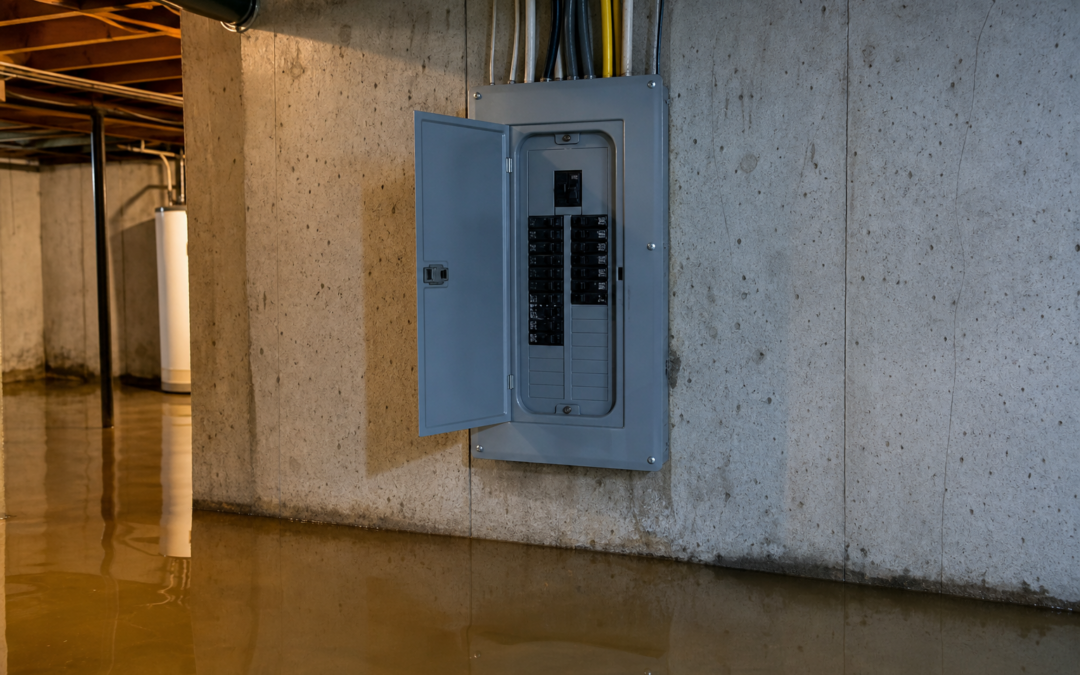
- Standing water anywhere near your electrical panel or a subpanel. Basements are where both the water and the panel usually live. This is the highest-risk scenario there is.
- Water at or above outlet height. Outlets, switches, and hardwired baseboard heaters below the waterline should be treated as live.
- Water coming through ceilings and light fixtures. Can lights and ceiling fixtures channel water directly onto energized connections.
- Extension cords, power strips, or appliance cords sitting in water.
- Wet furnaces, water heaters, or HVAC equipment. These have both electrical components and gas connections.
- A sparking, buzzing, or burning smell anywhere in the house. Leave and call 911.
What to do BEFORE re-entering a flooded home
1. Do not wade in to reach the breaker panel. If the panel is in the flooded area, or if you would have to step into water to reach it, stop. Call your utility and have the power cut at the meter instead. In Northern Colorado that means Xcel Energy, Poudre Valley REA, or your municipal utility — Loveland Water and Power, Fort Collins Utilities, Longmont Power, or Greeley’s provider depending on where you are.
2. If the panel is dry and safely reachable, shut off the main breaker. Stand on a dry surface, use one hand, and do not touch anything metal with the other.
3. Shut off the water at the main. If the water is still coming in, the electrical risk keeps growing.
4. Keep everyone out — especially kids and pets. Including the “I’ll just grab one thing” trip.
5. Do not assume a power outage means safety. Outages end without warning. Backfeed from a generator, a UPS, solar inverters, or battery backups can energize circuits even when the grid is down.
6. Photograph what you can from a safe distance. Your claim will benefit from it.
Common mistakes we see
- Running shop fans and dehumidifiers off extension cords in a wet basement to “get a head start” on drying
- Flipping breakers back on to test whether circuits still work
- Using a wet/dry vacuum plugged into a submerged or wet outlet
- Assuming GFCI outlets protect the whole house — they only protect their own circuit, and older Colorado homes may have very few
- Restarting a furnace, water heater, or air handler that has been submerged. Submerged appliances and HVAC components generally need to be evaluated and often replaced, not dried out and reused
- Re-energizing a panel that got wet. Water inside a panel causes corrosion on the bus bars that can create a fire hazard months later, long after everything looks fine
How Revive handles the electrical side
We do not guess. On arrival we verify power status, use non-contact testing before anyone enters standing water, and set up safe temporary power for our own drying equipment rather than borrowing your outlets. Our crews carry the PPE for it, and our extraction equipment is designed for exactly this environment.
When wiring, outlets, panels, or hardwired equipment have been affected, we coordinate directly with licensed electricians we have worked with for years. Restoration and electrical work have to happen in the right order — you do not want drywall closed up before wiring in a wet wall cavity has been evaluated.
Why documenting electrical damage matters for your claim
Electrical components are one of the most commonly under-claimed parts of a water loss. Adjusters need to see which circuits, fixtures, appliances, and panel components were affected, and they need it documented before the demolition and drying erase the evidence. We photograph, log, and scope all of it as part of the job.
That is also why we tell every homeowner the same thing: call Revive before you call your insurance company. Ten minutes of proper documentation up front is worth more than any amount of arguing later. The inspection costs you nothing.
The short version
If there is standing water and you are not certain the power is off, stay out. Get the power cut at the source, keep your family clear, and let people with meters and moisture equipment make the call about what is safe.
Flooded home in Northern Colorado? Call Revive Restoration at (720) 340-3499 — 24/7 emergency response, free inspection, and we will assess it safely before anyone steps back inside.