

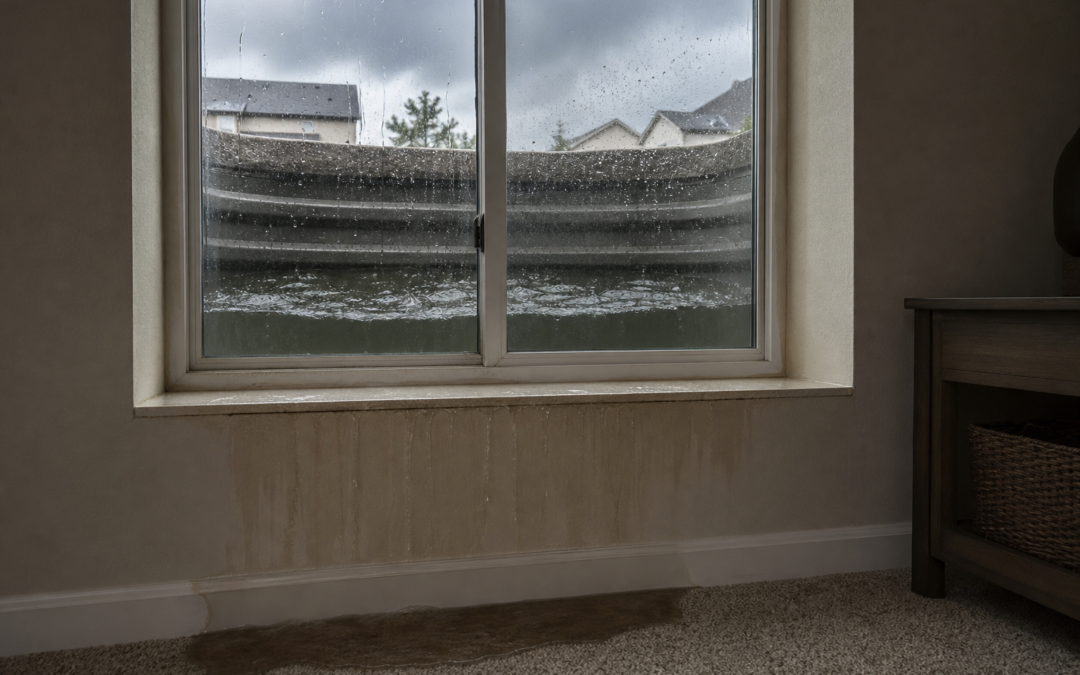
It’s the middle of a summer thunderstorm. Rain is pounding the side of your house, and you hear it — a gurgling sound from the basement. You go downstairs and find water pouring in through the basement window. The window well outside has filled up like a bathtub, and the water has nowhere to go except straight into your home.
If this has happened to you — or if you’re worried it might — you’re not alone. Window well flooding is one of the most common causes of basement water damage in Northern Colorado, especially during the late July and August storm season. Here’s what’s happening, what to do about it, and how to make sure it doesn’t happen again.
Why Window Wells Flood
Window wells are designed to let light and air into below-grade basement rooms while keeping soil and water away from the glass. When they’re working properly, rainwater drains down through gravel at the bottom and away from your foundation. But several things can cause that system to fail:
- Clogged drains. Most window wells have a drain at the bottom that connects to your footing drain or sump system. Over time, dirt, leaves, and debris clog these drains — and during heavy rain, the water has nowhere to go but up.
- Undersized wells. Some window wells are simply too small for the volume of water that hits them during a Northern Colorado downpour. Builder-grade wells are often the minimum size required by code — not optimized for heavy storms.
- Improper grading. If the ground around your foundation slopes toward the house instead of away from it, surface water runs directly into your window wells during rain events.
- Missing or damaged covers. Window well covers keep the majority of rain and debris out. Without a cover — or with a cracked, warped, or ill-fitting one — your well fills up much faster.
- Overwhelmed drainage. Even a well-maintained window well can be overwhelmed by an intense enough storm. Northern Colorado gets sudden, heavy downpours that can dump inches of rain in under an hour — more than any residential drainage system was designed to handle.
What Happens When Window Well Water Gets Inside
Once water breaches the basement window — whether through a failed seal, a cracked pane, or sheer pressure — it enters your finished or unfinished basement and starts doing damage fast:
- Drywall absorbs water like a sponge. Within minutes, the bottom section of basement drywall begins wicking water upward. Even after the flooding stops, moisture continues traveling through the drywall — often 12 to 18 inches above the visible waterline.
- Carpet and pad trap moisture. Basement carpet doesn’t dry from underneath. Water gets trapped between the pad and the concrete slab, creating a warm, dark, moist environment — perfect conditions for mold growth within 24 to 48 hours.
- Framing and insulation behind walls. In finished basements, the 2×4 framing and fiberglass insulation behind the drywall absorb water and hold it. You can’t see it, but it’s there — and it’s already growing mold.
- Electrical and mechanical systems. Basement outlets, wiring, and HVAC equipment can be compromised by water intrusion, creating safety hazards that aren’t always immediately obvious.
What to Do Immediately
If your window well is flooding or has already let water into your basement, here’s your immediate action plan:
- If rain is still falling, cover the window well. A tarp, a piece of plywood, even a heavy trash bag weighted down — anything to stop more water from filling the well. This buys you time.
- Don’t walk through standing water near electrical outlets. If water has reached the level of any outlets or electrical panels, stay out and call for help.
- Call Revive Restoration BEFORE calling your insurance company. Having a professional on-site first means proper documentation, faster water extraction, and a smoother insurance claim. We work with all carriers and handle the communication for you.
- Document the damage. Once it’s safe, take photos and videos of the water level, the window well, and any damage you can see. Timestamps on your phone camera are your best friend during the claims process.
- Don’t use household fans on contaminated water. If the water coming through your window well is muddy, contains sediment, or has mixed with any sewer or drain backup, running fans can spread contaminants through the air. Let a professional assess the water category first.
Short-Term Fix vs. Long-Term Prevention
After the immediate crisis is handled and your basement is dried and restored, it’s worth investing in prevention so this doesn’t happen again:
- Install quality window well covers. Clear polycarbonate covers keep rain, snow, and debris out while still letting light in. Make sure they fit tightly and are rated for the weight of snow and foot traffic.
- Clear and test the drain. Have the drain at the bottom of each window well inspected and cleared. If there’s no drain, consider having one installed that ties into your footing drain or sump system.
- Improve grading around the foundation. The ground should slope away from your house at a minimum of 6 inches over the first 10 feet. This is one of the most effective — and cheapest — ways to keep water away from your foundation.
- Extend downspouts. Make sure your gutter downspouts extend at least 4 to 6 feet away from the foundation. Downspouts that dump water right next to window wells are a recipe for flooding.
- Upgrade your sump pump. If your home has a sump system, make sure the pump is working, has a battery backup, and is rated for the volume of water your area gets during heavy storms.
Is Window Well Flooding Covered by Insurance?
Good news: window well flooding is often covered by homeowners insurance in Colorado, especially when it’s caused by a sudden weather event. The key is documentation — and that’s where calling Revive first makes a big difference.
We document the source of the water, the extent of the damage, moisture readings, and the scope of work needed. We then communicate directly with your insurance adjuster to make sure your claim is handled properly and nothing falls through the cracks.
Every policy is different, so we can’t guarantee coverage — but we can tell you that having professional documentation from the start significantly improves outcomes.
Window Well Flooding Is a Revive Specialty
We see it every storm season — Wellington, Windsor, Loveland, Fort Collins, Greeley, Johnstown — homeowners across Northern Colorado dealing with water pouring through their basement windows. It’s one of the most common calls we get, and we’ve got the process dialed in.
Call Revive Restoration at (720) 340-3499 — we respond in 60 minutes or less, 24/7. We’ll extract the water, dry your basement properly, and help you prevent it from happening again.
Call Revive BEFORE calling your insurance company. We handle the documentation and adjuster communication so you can focus on your family.