Windsor was built around water. Lakes, ponds, irrigation ditches, reservoirs and the Poudre River corridor are the reason the town looks the way it does — and they’re also the reason we get basement flooding calls here that have nothing to do with a broken pipe.
If your Windsor basement takes on water and the plumber tells you there’s no plumbing problem, this is usually why.
Groundwater Doesn’t Need a Broken Pipe
Beneath your yard is a saturation level — the water table — and it moves. It rises with spring snowmelt off the Front Range, with irrigation season when ditches and canals run full, with a wet stretch of weather, and with high flows on the Poudre.
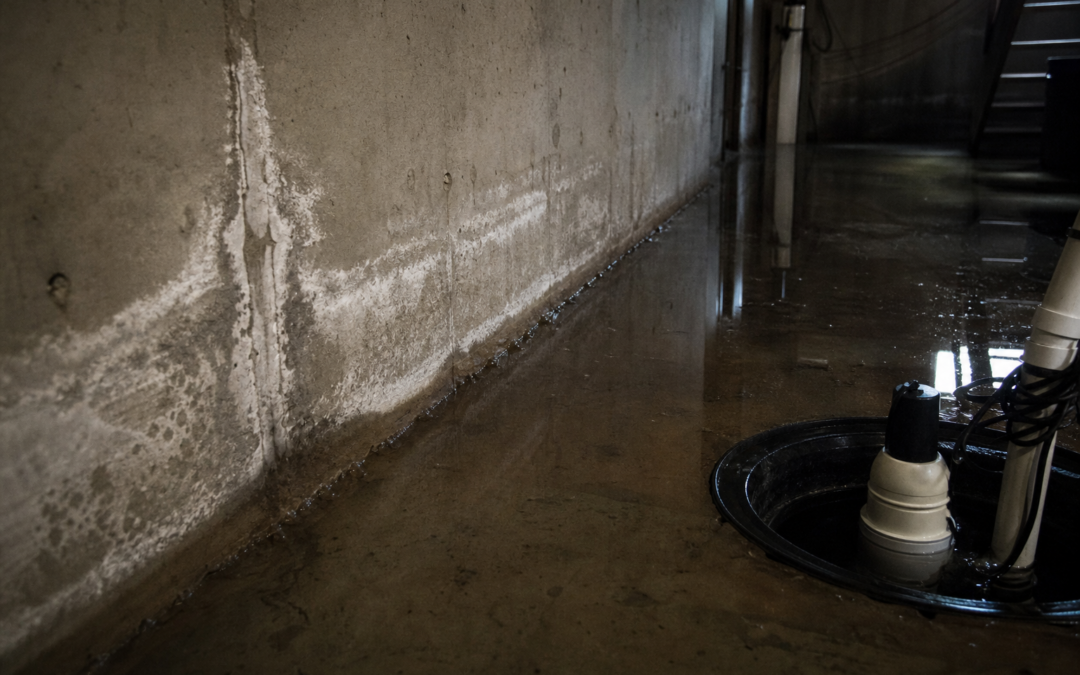
When that level climbs above your basement floor, the soil around your foundation is holding water under pressure. Concrete is porous and foundations have joints, and water under sustained pressure finds every one of them. It moves through the cold joint where the wall meets the footing, through form-tie holes, through hairline shrinkage cracks, and up through the slab itself.
There’s no dramatic failure. The basement is just wet, over and over, in the same weeks each year.
Windsor’s Particular Situation
Neighborhoods built near the town’s water features — Water Valley, RainDance, Poudre Heights and the areas around Windsor Lake — sit closer to elevated groundwater than most of Northern Colorado. This isn’t theoretical. During high Poudre River flows in June 2010, homes in the Poudre Heights subdivision took on basement water and crews were laying sandbags at the intersection of 7th Street and Riverplace Drive.
Two other local factors compound it:
- Irrigation infrastructure. Windsor is threaded with ditches and canals that run full through the growing season. Local groundwater levels follow that schedule.
- Expansive clay soils. Much of the Front Range sits on clay that swells when wet and shrinks when dry. That cycle works foundation cracks open a little wider every year and drains poorly, holding water against your walls instead of letting it pass.
Telling Groundwater Apart From a Plumbing Leak
The distinction matters, because it changes both the fix and how your insurance treats it.
Signs it’s groundwater or surface water:
- Water appears at the floor-wall joint or seeps up through the slab rather than running down a wall
- It correlates with weather — snowmelt, a heavy storm, the start of irrigation season
- It’s seasonal and recurring, roughly the same time each year
- Efflorescence — chalky white mineral residue — on basement concrete
- Multiple areas of the perimeter are damp, not one spot
Signs it’s plumbing:
- Water is clean and appears regardless of weather
- It’s concentrated near a fixture, appliance or a specific wall
- Your water bill jumped
- You can hear running water with everything shut off
Be honest with yourself about which one you have, because most homeowners policies cover sudden and accidental plumbing failures but exclude groundwater seepage and surface flooding. Groundwater intrusion generally needs separate flood coverage or a sewer/water backup endorsement. If you’re in a Windsor neighborhood near water, that endorsement is usually inexpensive and worth asking your agent about before you need it.
What Actually Keeps a Windsor Basement Dry
Start outside — it’s cheaper and it works
- Grading. Soil should drop about six inches over the first ten feet from your foundation. On newer Windsor lots this settles and reverses within a few years. Check it each spring.
- Downspouts. Extend them at least four feet out, further on a lot that slopes back toward the house. A downspout dumping at the foundation can put thousands of gallons into the soil against your wall in one storm.
- Gutters. Clogged gutters overflow at the foundation, which is the same problem with extra steps.
- Window wells. They need drainage and covers. An uncovered well is a bucket with a window at the bottom.
- Irrigation. Keep sprinkler heads and drip lines away from the foundation, and check for a head that’s been quietly soaking one corner of the house all summer.
Then inside
- A sump pump sized for a bad year, not an average one. Many Windsor homes have a pump that’s adequate until the one week it isn’t.
- A battery backup. Our worst groundwater weeks arrive with the storms that knock out power. A sump pump without backup is a sump pump that fails exactly when it matters.
- Test it. Pour a bucket of water into the pit twice a year and confirm it kicks on and discharges.
- Interior drain tile for chronic cases — a perimeter channel that collects water at the footing and routes it to the sump before it reaches your floor.
When It’s Already Wet
Standing water in a finished basement is not a shop-vac problem. Carpet pad, drywall and framing wick moisture upward and hold it, and the surface will feel dry long before the cavity behind it is. In trapped moisture, mold can begin growing within 24 to 48 hours.
What to do:
- Stay out if water is near outlets, the furnace or the panel, and cut power to the area only if you can reach the breaker safely.
- Photograph everything before you move or clean anything.
- Get belongings up off the floor if it’s safe.
- Don’t tear out wet drywall or carpet before it’s documented.
- Call us at (720) 340-3499.
Call us before you call your insurer. We document the loss properly first — moisture mapping, thermal imaging, a real scope — so the claim is filed with evidence rather than a guess. We work directly with all carriers, and we’ll tell you honestly whether what you have is likely to be covered.
We Know These Basements
Revive Restoration is based in Johnstown, roughly nine miles from Windsor, on-site in about 60 minutes, 24/7. Levi was born and raised in Northern Colorado and we’ve been family operated since 2016. We’ve dried a lot of Windsor basements and we can usually tell you within an hour whether you’re looking at a plumbing failure or a water table problem — and what each one will actually take to fix.
Wet basement in Windsor? Call (720) 340-3499. Free inspection, day or night.
See our Windsor water damage restoration services, or read about water damage in newer Windsor homes and what the restoration process looks like. We also cover Severance, Timnath, Greeley and every community on our service areas page.