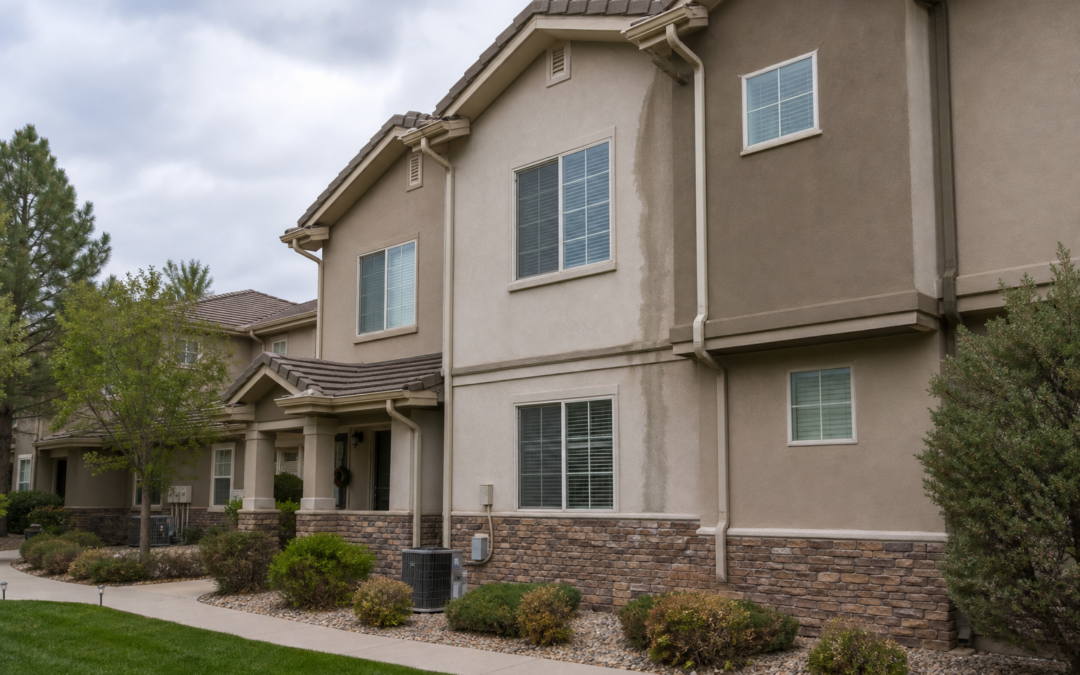
A pipe lets go in the wall between two condo units. Water runs down into the unit below. Everyone in the building has the same question at the same time: whose problem is this?
If you own a condo or townhome in an HOA community anywhere along the Front Range, this is worth understanding before it happens — because the hours you spend arguing about responsibility are the same hours mold needs to get started.
The short answer: stop the damage first, sort out the bill second. Call Revive at (720) 340-3499, and we’ll document everything so the responsibility question can actually be answered with evidence.
Master policy vs. your individual policy
Almost every HOA carries a master policy covering the building and common areas. Every unit owner should carry an HO-6 condo policy covering their own unit. Where the line falls between them is defined in your association’s governing documents — and it varies more than people expect.
The three common arrangements:
- Bare walls: the master policy covers the structure only — studs outward. Everything inside your unit (drywall, flooring, cabinets, fixtures) is yours.
- Single entity / original specification: the master policy covers the unit as originally built, but not your upgrades. Put in hardwood over the builder’s carpet? The upgrade is on you.
- All-in / all-inclusive: the master policy covers the unit including fixtures and finishes; your policy handles personal property, loss of use, and the deductible.
Then there’s the piece nobody reads until it matters: the master policy deductible. Many associations carry deductibles of $10,000-$25,000 or more, and many declarations allow the HOA to pass that deductible on to the unit owner whose unit the loss originated in. Your HO-6 may or may not include “loss assessment” coverage for exactly that. Check it this week, not after a flood.
Common area leaks — where it usually goes wrong
Some sources are almost always HOA responsibility, and some are almost always yours. The general rule: if it serves more than one unit, it’s usually common.
Typically the HOA’s:
- Roof leaks and failed flashing after a hailstorm
- Shared plumbing stacks and main supply lines running through walls
- Sprinkler and irrigation systems on common grounds
- Pool rooms, mechanical rooms, hallways, shared laundry
- Exterior drainage and grading against the foundation
Typically the owner’s:
- Your water heater, dishwasher, washing machine hose, fridge ice maker line
- Fixtures, toilets, and supply lines inside your unit
- An overflowed tub or a window left open in a storm
The messy reality is that most real losses cross the line. A common stack fails, but the damage is inside three units. That’s why documentation from an independent restoration company matters so much — it establishes the point of origin, the path of the water, and the true extent of wet material in each unit. Without that, you get three adjusters and a board all working from guesses.
What to do the moment you find water in a shared building
- Shut off water to your unit; if the source is common plumbing, call the emergency line for your property manager immediately.
- Notify the HOA in writing — email, timestamped. Verbal reports evaporate.
- Photograph everything, including your neighbors’ visible damage if they’ll allow it.
- Warn the units below and beside you. Water travels sideways and down through shared cavities long before it shows on a ceiling.
- Call a restoration company right away. Every insurance policy — master and individual — requires the party in control to take reasonable steps to prevent further damage. Waiting for a board meeting is not that.
Why boards should have a restoration company on speed dial
The associations that handle water losses well all have one thing in common: they decided who to call before anything happened.
When there’s a pre-existing relationship, the emergency call takes 30 seconds instead of three days of vendor shopping. Mitigation starts inside the hour, which caps the loss and protects the master policy’s claims history — and therefore next year’s premium. Documentation is consistent across every affected unit, so allocating cost between the master policy and individual owners becomes a math problem instead of a fight. And owners see the board acting decisively, which is worth more goodwill than almost anything else a board does.
We work with HOAs, property managers, and boards throughout Northern Colorado, and we’re happy to be that number on the wall — no contract, no retainer, just a team that already knows your building when it matters.
Call Revive first, then sort out who pays
Here’s our standing advice for condo and townhome owners: call us before you call your insurance company. When you call the carrier first, you’re opening a claim with no scope, no moisture data, and no evidence of origin — in a building where origin is the entire argument. We arrive first, map the moisture with meters and thermal imaging, stop the spread, and hand every party the same set of facts.
We serve HOA communities across Fort Collins, Loveland, Greeley, Windsor, Longmont, Broomfield, Erie, and Louisville — see all 37 communities we cover on our service areas page.
Water damage in your condo, townhome, or HOA common area? Call Revive Restoration at (720) 340-3499 — 24/7 response, free inspection, and documentation every party can rely on.