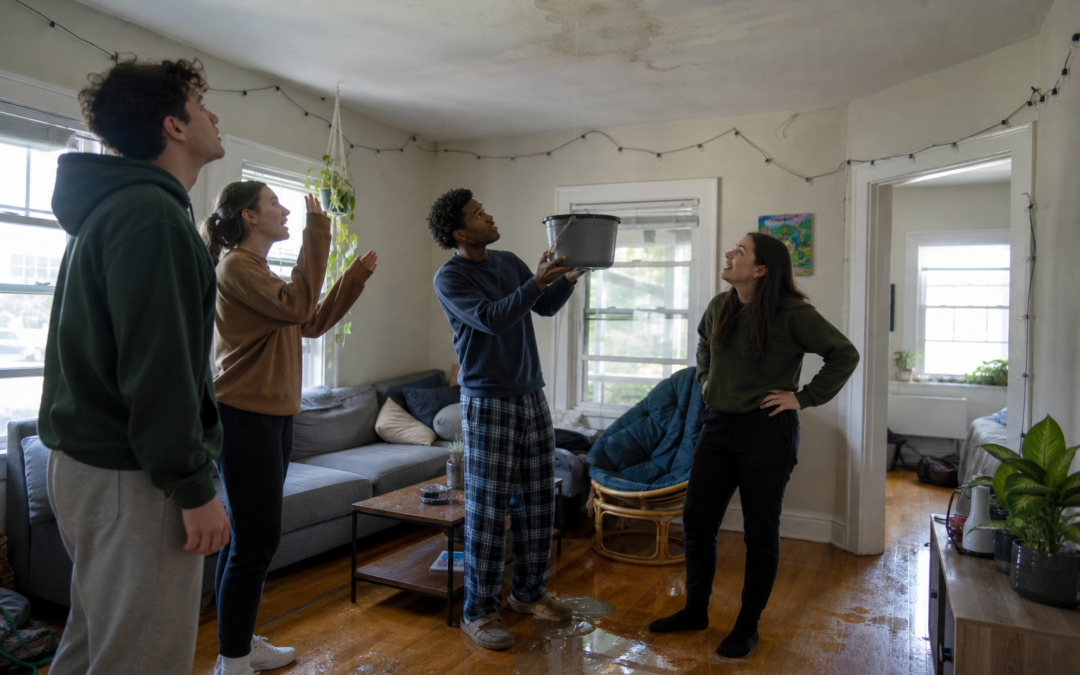
You signed the lease, hauled your stuff up the stairs, and now — three weeks into the semester — there’s water coming through the ceiling of your Old Town rental, or the dishwasher flooded the kitchen, or the basement bedroom smells like a wet basement because it is a wet basement.
Renting near CSU is its own world: older houses split into units, landlords who may or may not answer the phone, roommates who all assume someone else is handling it. Here’s exactly what to do — and what you’re actually responsible for.
First: what to do in the first 30 minutes
- Shut off the water if you can find the valve — under the sink, behind the toilet, or the main in the basement.
- Unplug electronics and stay out of standing water near outlets or power strips.
- Photograph and video everything — the water, the ceiling, your soaked belongings, the timestamp. This is your evidence, and you will need it.
- Text your landlord or property manager in writing. Not a phone call. Written, timestamped, so there’s a record of when you reported it.
- Get your stuff off the floor — laptops, textbooks, clothes, anything you care about.
Then call a restoration company. Yes, even as a renter. We answer 24/7 at (720) 340-3499, the inspection is free, and we work directly with landlords and property management companies all over Northern Colorado — so you’re not stuck being the middleman.
Who pays for what: renter vs. landlord
This trips up almost every student tenant, so let’s make it simple.
Your landlord is responsible for the building. The structure, plumbing, roof, walls, flooring, appliances they provided, and making the unit habitable. If a pipe fails or the roof leaks, that’s on them to repair — and their property insurance covers it.
You are responsible for your own belongings. Your landlord’s policy does not cover your laptop, your clothes, your furniture, or your bike. That’s what renter’s insurance is for — and it’s usually $10-20 a month. If you don’t have it, this is your sign.
The gray zone: damage you caused (overflowed tub, unplugged nothing, left a window open in a storm) can come out of your deposit. Damage you reported promptly and didn’t cause is on the landlord. Notice how much that hinges on reporting it promptly and in writing.
Why mold spreads so fast in shared-wall rentals
Older rental houses around campus were rarely built for the way they’re used now — multiple units, shared plumbing stacks, finished basements with limited ventilation, and bathrooms running nonstop.
Mold needs three things: moisture, organic material (drywall, wood, carpet backing), and time. Give it 24 to 48 hours and it starts. In a shared-wall unit, moisture from your bathroom or your neighbor’s burst supply line travels through the wall cavity — which means the visible stain on your side is almost never the full picture. We routinely open a wall on a “small” rental leak and find several feet of saturated framing.
Warning signs worth taking seriously: a persistent musty smell, dark spotting on baseboards or ceiling corners, paint bubbling, warm humid air in one room, or roommates with unexplained congestion and headaches that improve when they leave the house.
“My landlord says they’ll get to it next week”
This is the most common message we get from student renters, and it’s a problem — because every day of delay makes the damage worse and makes it harder to prove what caused what.
What to do:
- Follow up in writing and reference the original report date.
- Note that Colorado’s warranty of habitability covers conditions that materially affect health and safety — mold and standing water qualify.
- Offer your landlord a fast fix: give them our number. Most property managers say yes immediately when a licensed local company can be on site in an hour with documentation their insurer will accept.
- Keep drying what you safely can — fans, open windows on dry days, dehumidifier if you have one. Don’t rely on it to solve the problem.
Why the “call before insurance” rule applies here too
If a claim gets filed on this — yours or the landlord’s — it goes far better with real documentation attached. Moisture readings, thermal images, a written scope. Without that, insurers push back on how much was actually wet, and that fight lands on whoever has the least paperwork. Usually the tenant.
Getting a professional inspection costs you nothing and gives you an objective record of what happened, when, and how bad.
We work with renters, landlords, and property managers across NOCO
We respond 24/7 throughout Fort Collins and the surrounding area — including Timnath, Wellington, LaPorte, Windsor, Loveland, and Greeley. Full coverage map on our service areas page, and more on mold remediation if you’re already smelling trouble.
Flooded rental near campus? Call Revive Restoration at (720) 340-3499 — 24/7, free inspection, and we’ll talk to your landlord directly.