Every year in Northern Colorado, the first hard freeze arrives faster than anyone expects. One October night the temperature drops into the teens, and by morning a pipe in a crawl space or an exterior wall has split wide open. The homeowner doesn’t find out until the thaw — when water starts pouring through a ceiling or across a finished basement floor.
Here’s the good news: frozen pipe damage is one of the most preventable disasters we respond to. A few hours of work this fall can save you a five-figure restoration job in January. Here’s exactly what to do, and what to do if it’s already too late.
Why Northern Colorado Pipes Are Especially Vulnerable
Our climate is uniquely hard on plumbing. It isn’t just the cold — it’s the swing. A 65-degree afternoon in Loveland can drop to 12 degrees overnight, and that rapid change is exactly what causes pipes to fail. A few local factors make it worse:
- Crawl spaces and unheated basements. Many older homes across Windsor, Johnstown, and Greeley have vented crawl spaces where supply lines run completely exposed to outside air.
- Pipes in exterior walls. Homes built before modern insulation standards often have supply lines running through north-facing exterior walls — the coldest spot in the house.
- Attached garages. Water heaters, utility sinks, and supply lines in an unheated garage freeze surprisingly fast, especially when the garage door is left open on a cold day.
- Vacant and second homes. If a property sits empty during a cold snap with the heat turned way down, there’s nobody there to notice a problem for days.
- Outdoor spigots and irrigation. A hose left connected to an outdoor faucet traps water in the line — that water freezes, expands, and can crack the pipe back inside the wall.
Your Fall Winterizing Checklist
None of this requires a plumber. Most of it takes an afternoon.
- Disconnect every garden hose and drain it. Then shut off the interior valve to each outdoor spigot and open the spigot to let the line drain.
- Blow out your sprinkler system before the first freeze. This is worth paying a professional for — a cracked irrigation line can saturate the soil right against your foundation come spring.
- Insulate exposed pipes in crawl spaces, basements, garages, and attics with foam pipe sleeves. They cost a few dollars each at any hardware store.
- Seal air leaks near pipes — crawl space vents, rim joists, gaps where lines enter the house. Cold air blowing directly on a pipe is what freezes it.
- Know where your main shutoff is. Find it now, make sure it turns, and make sure everyone in the house knows where it is. In an emergency, thirty seconds of fumbling costs you gallons.
- Keep the heat on. Never set the thermostat below 55°F, even when you’re away. If you’re traveling for the holidays, ask someone to check on the house.
What to Do During a Hard Freeze
When the forecast calls for single digits or below, take these extra steps for the night:
- Let faucets drip. A slow, steady trickle from the faucets on exterior walls relieves the pressure that actually bursts pipes. The tiny water bill increase is nothing compared to a restoration bill.
- Open cabinet doors under kitchen and bathroom sinks so heated room air can reach the supply lines.
- Keep the garage door closed — especially if there’s plumbing in there.
- Don’t turn the heat down at night during a cold snap, even if you normally do.
Warning Signs a Pipe Has Already Frozen
Catching a frozen pipe before it bursts is your best-case scenario. Watch for:
- A faucet that produces only a trickle, or nothing at all, on a cold morning
- Visible frost or condensation on an exposed section of pipe
- Strange gurgling or banging noises from the plumbing
- A bulging or visibly deformed section of pipe
- A sewage-like or musty smell coming from a drain (a sign of a blocked, frozen line)
If you suspect a frozen pipe, shut off the water at the main immediately, then open the affected faucet so melting water has somewhere to go. You can gently warm the pipe with a hair dryer or a space heater kept at a safe distance. Never use a blowtorch, propane heater, or open flame — that’s how house fires start, and it can crack the pipe outright.
When a Pipe Bursts: The First 15 Minutes
A burst half-inch supply line can put out several hundred gallons an hour. What you do in the first few minutes determines whether this is a repair or a gut job.
- Shut off the water main. This is step one, before anything else.
- Kill the power to affected areas at the breaker if water is anywhere near outlets, wiring, or the electrical panel — but don’t wade through standing water to reach the panel.
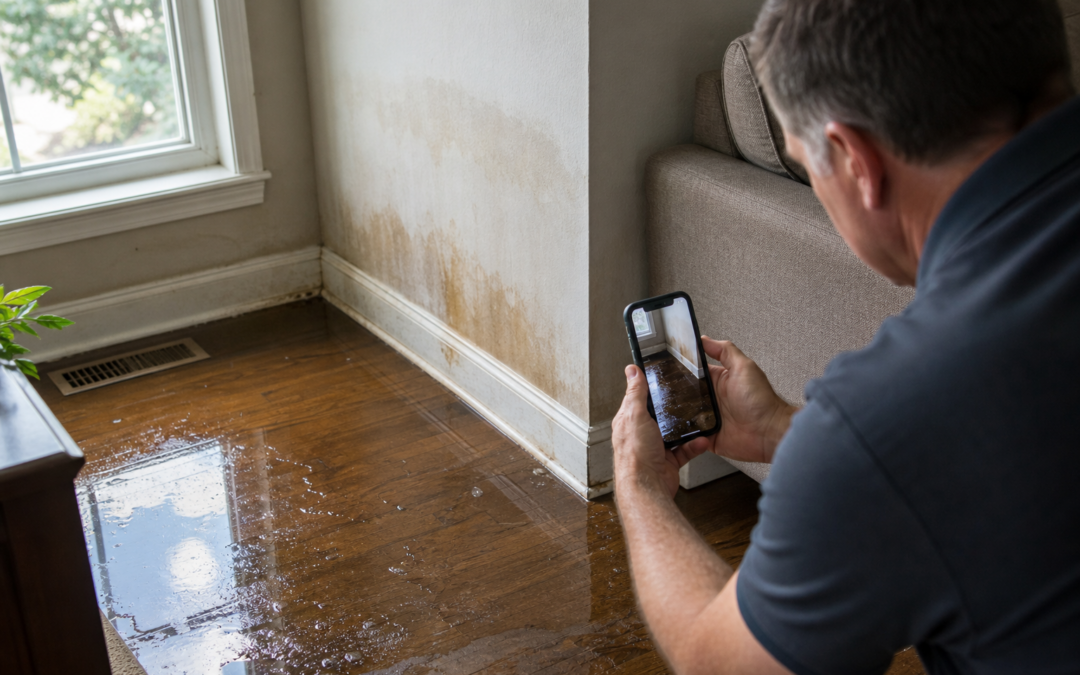
- Take photos and video of everything before you move or clean anything. Your insurance claim will depend on it.
- Call Revive before you call your insurance company. We can be on site fast, start extracting water, and document the damage properly — which makes your claim stronger, not weaker. We work with all carriers, and it’s genuinely easier for everyone when we’re involved from the beginning.
The reason speed matters so much: water wicks into drywall, subfloor, and framing within hours, and mold can begin growing in 24 to 48 hours. Fast professional drying is what keeps a burst pipe from turning into a mold remediation project on top of everything else.
We’re Here When It Happens
Revive Restoration is locally owned and family-operated — Levi was born and raised right here in Northern Colorado, and we know exactly how these winters treat local homes. We’re available 24/7 with a 60-minute response time, and we work with every insurance carrier.
Even if you’re not sure how bad it is, call us. We have moisture meters and thermal imaging tools that find water inside walls and floors that you simply can’t see — and a free inspection costs you nothing.
Burst or frozen pipe? Call Revive Restoration now at (720) 340-3499.
Serving All of Northern Colorado
We provide 24/7 emergency water damage restoration across the Front Range, including Fort Collins, Loveland, Greeley, Windsor, Johnstown, Longmont, and Berthoud. See every community we cover on our service areas page, or learn more about our water damage restoration services.
Already dealing with a burst pipe? Prevention is for next winter — right now you need our burst pipe emergency guide, or just call us at (720) 340-3499.