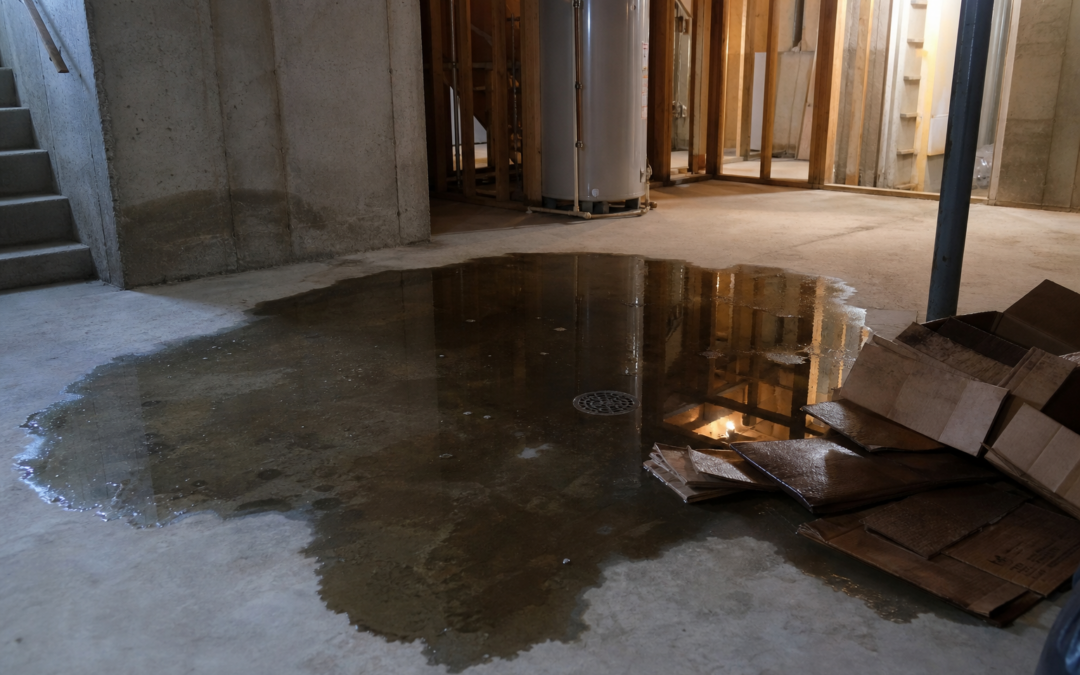
Of all the ways water gets into a Northern Colorado home, this is the one homeowners are least prepared for. There’s no storm, no burst pipe, no warning. Someone runs the washing machine and the basement floor drain starts producing water that should be leaving the house, not entering it.
Greeley gets more of these calls than the newer towns around us, and there are specific reasons why.
Dealing with one right now? Keep everyone out of the area, stop running water, and call (720) 340-3499. This is the category of water damage where waiting costs the most.
Why Greeley Specifically
Greeley is an old city by Colorado standards, and the City of Greeley has been openly working through infrastructure that is more than a century old in places. Three things stack up here:
1. Clay sewer pipe
Homes built here before roughly the mid-1980s commonly ran vitrified clay sewer lateral from the house to the main. Clay doesn’t rot, but it gets brittle, and our soils move. Freeze-thaw cycles and expansive clay soil shift the pipe until a joint separates or the barrel cracks.
Then the roots find it. A hairline crack leaks a little moisture into dry Colorado soil, and every tree within thirty feet grows toward it. Roots enter through the crack, thicken inside the pipe, and catch everything that flows past. The blockage isn’t sudden — it builds for years and then one ordinary Tuesday the line finally stops passing water.
2. The city’s pump stations
Greeley runs roughly ten sewage pumping stations, checked and maintained daily. The City is direct about the stakes: a failure at one of these stations can cause sewer overflows or backups into basements. When that happens, it isn’t your line that failed — but it’s still your basement.
3. Everything arriving at once
Heavy rain and rapid snowmelt push groundwater into the collection system through cracked pipes across the whole neighborhood. The system fills, capacity runs out, and the lowest fixture on the lowest floor in the area becomes the relief valve. If that’s your basement floor drain, you find out first.
In January 2008 a single backed-up sewer line pushed sewage into the basements of at least six Greeley homes in one night. That’s the pattern — it’s often a street problem, not a house problem.
Why This Isn’t a Mop-and-Fan Job
This is the part people push back on, so here’s the reasoning.
Restoration classifies water in three categories. Clean supply-line water is Category 1. Water with some contamination — a dishwasher overflow, for instance — is Category 2. Sewage is Category 3: grossly contaminated, carrying bacteria, viruses and parasites.
The rule for Category 3 is that porous materials that absorbed it come out. Not cleaned, not sprayed, not dried. Removed. That means:
- Carpet and pad — gone, without exception
- Drywall — cut out above the waterline, because it wicks upward well past where it looks wet
- Insulation in affected walls — gone
- Particleboard, MDF, laminate — gone
- Upholstered furniture and mattresses that sat in it — almost always gone
What can usually be saved: concrete, solid wood framing, sealed hard surfaces, metal, glass, and most hard-surface flooring — after cleaning and antimicrobial treatment.
Then the space gets dried to standard with monitoring, and only after it’s dry does anything get rebuilt.
We know that’s not what anyone wants to hear about their finished basement. But surface-cleaning a sewage loss leaves contamination inside materials your family breathes around. This is the one loss type where we won’t cut the scope to make a bid look better.
What to Do in the First Hour
- Get people and pets out of the affected area. Kids especially.
- Stop using water anywhere in the house. Every flush, every load of laundry, every shower adds to what’s coming up. This includes upstairs.
- Don’t walk through it and then walk through the rest of your house. Contamination tracks on shoes.
- Kill power to the affected area if you can do so safely from a dry location. If the panel is in the wet area, don’t — call an electrician or wait for us.
- Photograph everything before anything moves. Wide shots and close-ups. This is your claim.
- Don’t run a shop vac or a household carpet cleaner through it. You’ll aerosolize contamination and ruin the equipment.
- Call us. Then call the City of Greeley if you suspect it’s a main-line or pump-station issue rather than your lateral — if the problem is on their side, that matters for who pays.
The Insurance Part Nobody Reads Until It’s Too Late
Here’s what catches Greeley homeowners: a standard homeowners policy typically does not cover sewer backup. Coverage usually requires a specific endorsement — often called water backup or sewer backup coverage — that you have to add.
It’s generally inexpensive, often a modest annual add-on for a meaningful limit. If you own an older Greeley home with a finished basement and you don’t have it, call your agent this week. Not after.
And the usual advice applies double here: call us before you call your insurer. Category 3 losses get scrutinized hard. Filing a claim before anyone has documented the category, the affected square footage and the moisture readings puts you at a disadvantage that’s difficult to recover from. We document it properly first, then the claim goes in with evidence attached.
How to Not Have This Happen Again
- Get a sewer scope. A camera down the lateral costs a fraction of a restoration and tells you exactly what shape your line is in. Essential if your home predates 1985 or has mature trees near the sewer run.
- Install a backwater valve. It lets flow out and blocks it from coming back. This is the single most effective protection against a city-side backup.
- Stop putting grease and “flushable” wipes down the drain. Wipes do not break down. They’re a leading cause of the blockages we see.
- Root-treat annually if you have a clay line with trees nearby.
- Get the endorsement on your policy.
- Don’t store anything irreplaceable directly on a basement floor. Shelving, twelve inches up, costs almost nothing.
Call Even If You’re Not Sure
Some backups are dramatic. Others are a slow seep at the floor drain that stops on its own and leaves a smell. If your basement has an odor you can’t place, or a drain that gurgles when the washer drains, something is wrong with that line — and it’s cheaper to find it now.
We’d rather come out, scope it, and tell you it’s fine.
Sewer backup in Greeley? Call Revive Restoration at (720) 340-3499 — 24/7. Family operated since 2016, owned by Levi, born and raised in Northern Colorado.
See our full Greeley water damage restoration services, or read our other Greeley guides: water damage in older Greeley homes, Greeley flood risk and the insurance gap, and what happens after you call. We also serve Windsor, Johnstown, Loveland and Fort Collins — full list on our service areas page.