The homes around Glenmere Park, Hillside and the older streets near UNC are some of the best-built houses in Northern Colorado. Real lumber, plaster walls, mature trees, and character that nobody is building anymore.
They also have plumbing and foundations that were installed when Calvin Coolidge was president, and that shows up in our call log.
If you own an older Greeley home, this is what tends to fail, what the warning signs look like, and what’s worth doing before it becomes an emergency.
Galvanized Supply Pipe: The One That Surprises People
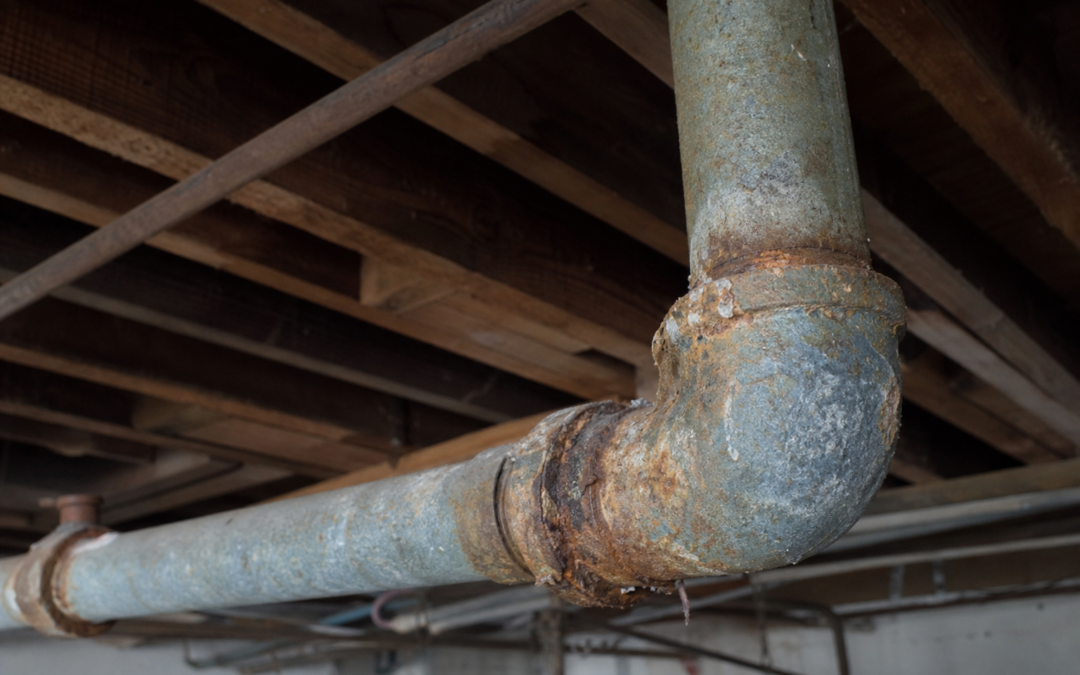
Homes built before roughly 1960 were commonly plumbed with galvanized steel supply pipe — steel dipped in zinc to resist corrosion. The zinc wears away over decades, and then the steel rusts from the inside out.
Two things happen. First, the interior diameter narrows as rust builds up, which is why an old Greeley house often has weak upstairs water pressure. Second, the wall thins from within until it fails.
That failure is rarely a slow drip. A pinhole opens under 60 psi of pressure, and the rushing water erodes the weakened metal around it, so the hole grows. What starts as a spray behind a wall becomes a serious flow within hours.
Signs to watch for: declining water pressure, rusty or brown water after the house has sat unused, visible corrosion or flaking at threaded joints in the basement, and pipe that’s dull grey and magnetic rather than copper-colored.
Galvanized supply pipe has a practical life of about 40 to 70 years. If yours is original to a pre-1960 house, it is past due. Repiping is real money — but it’s less than a repipe plus a restoration plus new flooring plus new cabinets.
Cast Iron Drains
The drain side of an older Greeley home is usually cast iron, which corrodes from the inside as decades of wastewater gases work on it. It fails differently than supply pipe: instead of pressurized spray, you get slow seepage at cracks and joints, often inside a wall or under the floor, quietly wetting framing for months.
This is the one that produces mold discoveries during a remodel. There’s no dramatic event — just wet framing nobody knew about.
Signs: recurring slow drains, a persistent sewer odor, staining on a basement ceiling below a bathroom, and flaking or bubbling on the exterior of visible cast iron.
Foundations Built Before Waterproofing Was a Concept
Older Greeley basements were often built without a vapor barrier, without exterior waterproofing membrane, and without a perimeter drain. Stone and early poured foundations move over a century, and Greeley’s expansive clay soils are enthusiastic participants.
The result is a basement that manages fine most years, then takes water during a wet spring or a fast melt. Look for white powdery efflorescence on the concrete or stone — that’s mineral left behind by water moving through the wall. It means water has been passing through, whether or not you’ve ever seen a puddle.
Also check the grade outside. Century-old landscaping, added patios and settled soil frequently mean the ground now slopes toward the house. That’s the cheapest problem on this list to fix and one of the most consequential.
The 1970s Finished Basement
A great many older Greeley homes have a basement that was finished decades ago, and the materials used then are the worst possible combination for a water event: wood paneling over furring strips fastened directly to masonry, carpet over concrete with no vapor barrier, and fiberglass insulation stuffed into stud bays against a wall that breathes moisture.
When water gets in, it goes behind the paneling and stays there. The room can look dry while the wall cavity behind it stays wet for weeks. If your older basement has original paneling and it’s ever taken water, that’s worth a moisture inspection even if it happened a while ago.
Original Water Heaters and Forgotten Supply Lines
Water heaters last 8 to 12 years. In older homes we frequently find units well past 15, sitting on a finished basement floor with no drain pan and no automatic shutoff. When the tank finally goes, it releases 40 to 50 gallons at once and then keeps refilling.
Same story with the braided or rubber supply lines to washing machines, toilets and sinks. Rubber lines are a five-year part that people leave for twenty. Replacing every supply line in an older house with braided stainless costs less than a nice dinner out and eliminates one of the most common losses we see.
What’s Worth Doing, In Order
- Replace every rubber supply line with braided stainless. Cheapest, fastest, highest-value item on this list.
- Check the age of your water heater and add a drain pan, or replace it if it’s past 12 years.
- Fix your exterior grade so soil slopes away from the foundation, and get downspouts discharging at least four to six feet out.
- Get a sewer scope if the home predates 1985 — older Greeley homes commonly have clay lateral, which is a whole problem of its own.
- Assess the supply plumbing. If it’s original galvanized, start planning a repipe rather than waiting for it to choose the timing.
- Install a water leak detector near the water heater, washer and any below-grade bathroom. Inexpensive, and they catch things while they’re still small.
When It Does Happen, Older Homes Get Dried Differently
This matters and not every company treats it seriously. Plaster and lath doesn’t dry like drywall. Original hardwood over plank subfloor doesn’t dry like engineered flooring over OSB. Stone foundations hold and release moisture on their own schedule.
The temptation on an old house is to demo aggressively because it’s faster. But original trim, plaster and hardwood are the value of the house, and once removed they can’t be bought back. We dry in place wherever the moisture readings allow it, and we take longer readings on older materials because they’ll fool you if you don’t.
Call Even If You’re Not Sure
Older homes are full of small mysteries — a stain that might be old, a smell in the basement, a spot of floor that gives a little. Our moisture meters and thermal imaging answer those questions in minutes, and the inspection is free.
In a hundred-year-old house, the difference between finding a slow leak this month and finding it next year is usually the difference between a repair and a renovation.
Water damage in an older Greeley home? Call Revive Restoration at (720) 340-3499 — 24/7. Family operated since 2016, owned by Levi, born and raised in Northern Colorado.
See our full Greeley water damage restoration services, or read our other Greeley guides: sewer backups in Greeley basements, Greeley flood risk and the insurance gap, and what happens after you call. We also serve Windsor, Johnstown, Loveland and Fort Collins — full list on our service areas page.