
Colorado is famous for sunshine, which is exactly why floods catch people off guard. A clear afternoon can turn into a flash flood warning in less than an hour, especially near the foothills, a creek, or a recent burn scar. The families who come through these events best aren’t the lucky ones. They’re the ones who spent an evening getting ready before they needed to.
This is a practical flood emergency plan for homeowners and renters across Northern Colorado and the Denver metro. Put it together once and it’s there when you need it.
Know Your Flood Risk (It’s Probably Higher Than You Think)
The Front Range has a long flood history: Denver’s 1965 South Platte flood, the 1976 Big Thompson flood, and the September 2013 floods that damaged thousands of homes from Estes Park to Evans. The Denver area’s regional flood agency, now the Mile High Flood District, was created in 1969 largely because of what the 1965 flood did to the city.
Your home is at higher risk if you:
- Live near a creek, river, ditch or drainageway, like the Big Thompson, Cache la Poudre, St. Vrain, South Platte, Clear Creek, or Cherry Creek
- Live downstream of a wildfire burn scar, where scorched ground sheds rain like pavement
- Have a finished basement, window wells, or a sump pump
- Live on a street where water pools after heavy storms
Look up your address on FEMA’s Flood Map Service Center and check your city or county’s floodplain maps. Remember that plenty of flood claims come from outside mapped high-risk zones.
Sign Up for Emergency Alerts Today
Flash floods move faster than news coverage. Make sure you hear about them:
- Register for your county’s emergency notification system. Larimer, Weld, Boulder, Adams, Jefferson, Broomfield and Denver each run one. Search “[your county] emergency alerts” and sign up every cell phone in the house.
- Make sure Wireless Emergency Alerts are turned on in your phone’s notification settings.
- Know the difference: a flood watch means conditions could produce flooding. A flood warning means it’s happening or about to happen, so act now.
Build a Family Flood Plan
Sit down with everyone in the house for 20 minutes and agree on:
- Two ways out of the neighborhood, in case one road floods. Many Front Range flood deaths happen in vehicles, so plan routes that avoid low crossings.
- Higher ground to head for on foot if you can’t drive.
- A meeting spot and an out-of-area contact everyone checks in with if you get separated.
- A plan for pets and anyone who needs extra help evacuating.
- Who shuts off what. Show every adult where the main water shutoff, gas meter and electrical panel are, and how to use them safely.
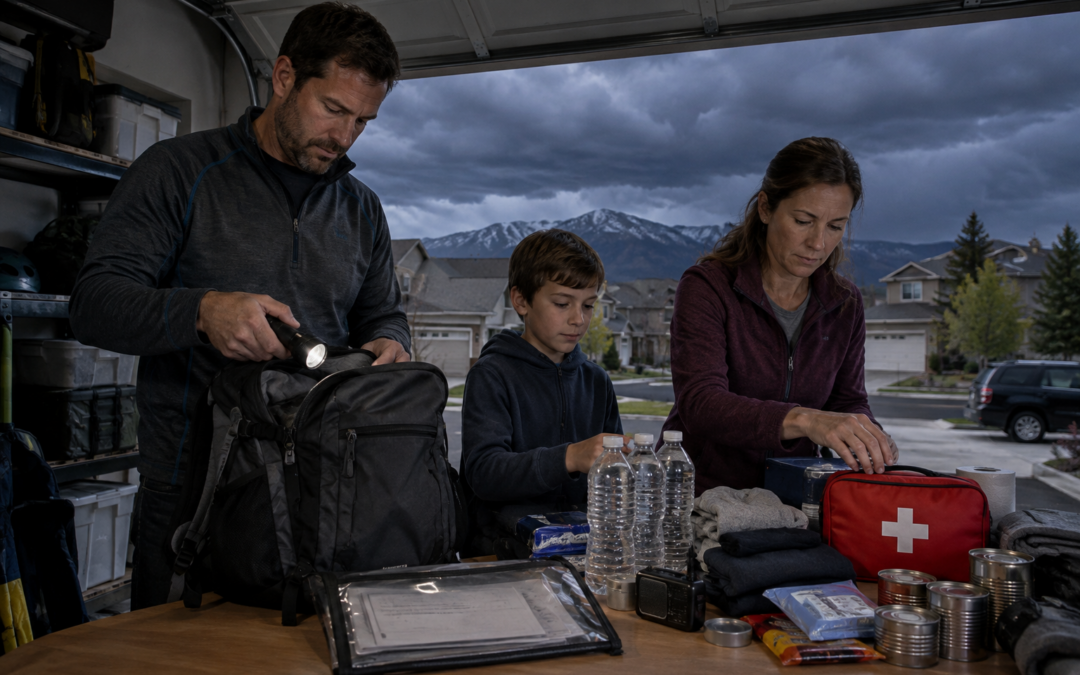
Pack a Go-Bag
Keep one ready per household, somewhere you can grab it on the way out:
- Water and non-perishable food for at least three days
- Flashlights, a battery or crank radio, and extra batteries
- Phone chargers and a portable battery pack
- Prescription medications, glasses, and a basic first aid kit
- Rubber boots, work gloves and N95 masks
- Cash, since card readers go down when the power does
- Pet food, leashes and carriers
- A change of clothes for everyone
Protect Your Paperwork
After a disaster, paperwork is what gets you paid. Keep these in a waterproof folder in your go-bag, and scan copies to the cloud:
- Insurance policies (homeowners, flood, auto) and your agent’s contact info
- IDs, passports, birth certificates and Social Security cards
- Mortgage or lease documents and property deed
- A home inventory: walk every room once a year with your phone recording video, opening closets and drawers. It takes 15 minutes and can save you weeks of arguing over what you owned.
Flood-Proof Your Home Before Storm Season
Most of the flood damage we see in basements could have been reduced by a few simple fixes:
- Test your sump pump each spring by pouring a bucket of water into the pit. Consider a battery backup. Power outages and heavy rain tend to show up together. See our sump pump failure guide.
- Clean gutters and extend downspouts at least several feet from the foundation.
- Cover window wells and make sure their drains are clear. See window well flooding.
- Check your grading so soil slopes away from the house.
- Install a backwater valve if your area has a history of sewer backups.
- Raise valuables in the basement onto shelving instead of the floor.
Review Your Insurance Now, Not After
This is the step that saves the most heartache. Pull out your policy and check:
- Do you have flood insurance? Standard homeowners policies usually exclude rising outdoor water. NFIP flood policies usually have a 30-day waiting period, so you can’t buy one when the forecast turns ugly.
- Do you have sewer backup coverage? It’s usually a separate add-on.
- Renters: your landlord’s policy doesn’t cover your belongings. Renters insurance does, and flood coverage for contents is available too.
Save One More Number in Your Phone
When water hits, you won’t want to be searching online for someone you can trust. Save Revive Restoration in your contacts now: (720) 340-3499.
We’re a family-owned restoration company based in Johnstown, available 24/7. We work with all insurance carriers, and we’d rather you call us first so we can document the damage properly and start drying right away, before you call your insurance company.
If the worst happens, our first 48 hours after a flood checklist and disaster relief guide will walk you through what comes next.
Water in your home right now? Call Revive Restoration at (720) 340-3499. The inspection is free.
Serving Northern Colorado and the Denver Metro
We help families prepare for and recover from flooding in Loveland, Fort Collins, Windsor, Berthoud, Erie, Lafayette, Louisville, Superior, Westminster, and Arvada. See all the communities we serve on our service areas page.