

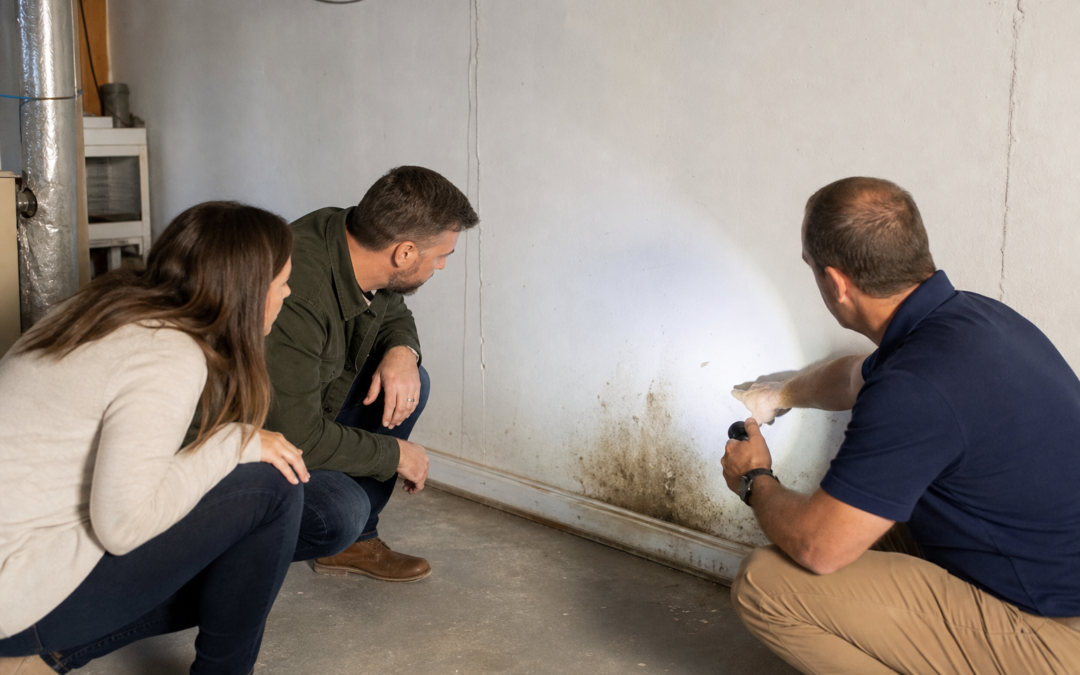
You’ve found it. Good street, right price, and the kitchen you’ve been scrolling past for six months. The inspection comes back “no major issues.” You’re ready to sign.
Slow down for ten minutes — because past water damage is the single most commonly hidden defect in Northern Colorado homes, and it’s the one that turns into a five-figure surprise after closing. Water damage that was cosmetically covered instead of properly remediated doesn’t stay hidden forever. It stays hidden just long enough to become your problem.
Red flags to look for during the walkthrough
Bring a flashlight. Actually use it. Here’s what to look for:
- Fresh paint in exactly one spot. A newly painted patch of ceiling, one repainted basement wall, or a single crisp section of an otherwise tired room. Nobody spot-paints for fun.
- Ceiling and wall staining. Brown or yellow rings, especially under bathrooms, around skylights, and near exterior walls. Even “sealed” stains often bleed back through.
- A musty, earthy, or damp-basement smell. Trust your nose over your eyes. Note whether air fresheners or plug-ins are running — and whether the smell returns when you turn them off.
- Warped, swollen, or discolored baseboards and trim. Wood that’s been wet swells at the bottom edge and never fully recovers. Press it; if it’s soft, that’s rot.
- Flooring that isn’t right. Cupping or crowning hardwood, buckled laminate, tile that sounds hollow when tapped, or brand-new flooring in only the basement.
- Efflorescence on foundation walls — a white, chalky mineral crust left behind by water moving through concrete.
- Rust or a water line on the furnace, water heater, or basement metal. A horizontal stain across a mechanical room wall tells you how deep the water got.
- A sump pump — and what’s around it. Is it clean and new (recently needed?) or corroded? Is there a water line on the pit walls?
- Storage on pallets or shelves in the basement. Sellers who keep everything off the floor usually know why.
- Crawl space conditions. Look in. Wet or crusted soil, slumped insulation, staining on joists, or a strong musty smell are all warnings.
- Doors and windows that stick, plus diagonal drywall cracks at corners — signs of foundation movement, often driven by chronic moisture in Colorado’s expansive clay.
- Grading and drainage. Does the soil slope toward the house? Are downspouts dumping right at the foundation? Are sprinkler heads spraying the siding? Most basement water problems start within six feet of the wall.
- Attic staining and daylight. Dark streaks on sheathing around vents and chimneys, or a rooftop that’s been patched rather than replaced.
Questions to ask the seller and agent — in writing
Verbal answers evaporate. Written answers create a record.
- Has this home ever had water intrusion, a leak, or a flood — including basement or crawl space seepage?
- Has an insurance claim ever been filed for water, mold, sewer backup, hail, or roof damage?
- Was any remediation performed? By whom, and can I see the invoice and the drying log?
- Has any mold testing or remediation been done? Can I see the report?
- How old are the roof, water heater, and sump pump? Any warranty documents?
- Have the sewer lines been scoped or repaired?
- Why were these specific rooms or finishes recently updated?
- Are there disclosures about drainage, grading, or foundation work?
Colorado uses a Seller’s Property Disclosure form — read it line by line, especially the water and moisture sections. And know this: a properly documented past repair is a good sign, not a bad one. The concern isn’t a home that had a leak. It’s a home that had a leak and can’t produce a single piece of paper about it.
Why a professional moisture inspection is worth it before closing
A general home inspection is broad by design. Inspectors are excellent generalists, but a standard inspection is largely visual, time-limited, and does not typically include comprehensive moisture mapping or thermal imaging of every wall cavity.
A water damage specialist brings different tools and a narrower question — is there moisture in this structure right now, and is there evidence of past intrusion?
- Moisture meters read the actual moisture content of drywall, framing, and subfloor — behind the paint.
- Thermal imaging reveals cool, wet areas inside walls and ceilings that look perfectly normal.
- Hygrometers flag humidity levels that suggest an ongoing source rather than a one-time event.
- Experience reading repairs — a specialist can tell the difference between drywall that was replaced after proper drying and drywall that was hung over wet framing.
The value is straightforward: a specialist inspection costs a fraction of what a hidden mold or rot remediation costs after closing. And if something is found, you’re negotiating from a position of documented fact — repair credits, a price reduction, or a clean walk-away — instead of a hunch.
If you’re selling instead of buying
The same logic runs in reverse. Getting a leak documented and professionally remediated before you list protects your disclosure, removes a major negotiating lever from the buyer, and prevents a deal from collapsing during inspection (past water damage also affects what your home is worth). Cosmetic cover-ups almost always get found — and when they do, you lose far more than the repair would have cost.
Get a straight answer before you sign
Revive Restoration offers free moisture inspections across Northern Colorado — Johnstown, Loveland, Windsor, Greeley, Fort Collins, Broomfield, and the wider Front Range. We’ll tell you honestly what we find: nothing, something small, or something you need to renegotiate over.
Buying a home is a big enough decision without a question mark behind the drywall.
Free inspection before you buy — call Revive Restoration at (720) 340-3499, 24/7.