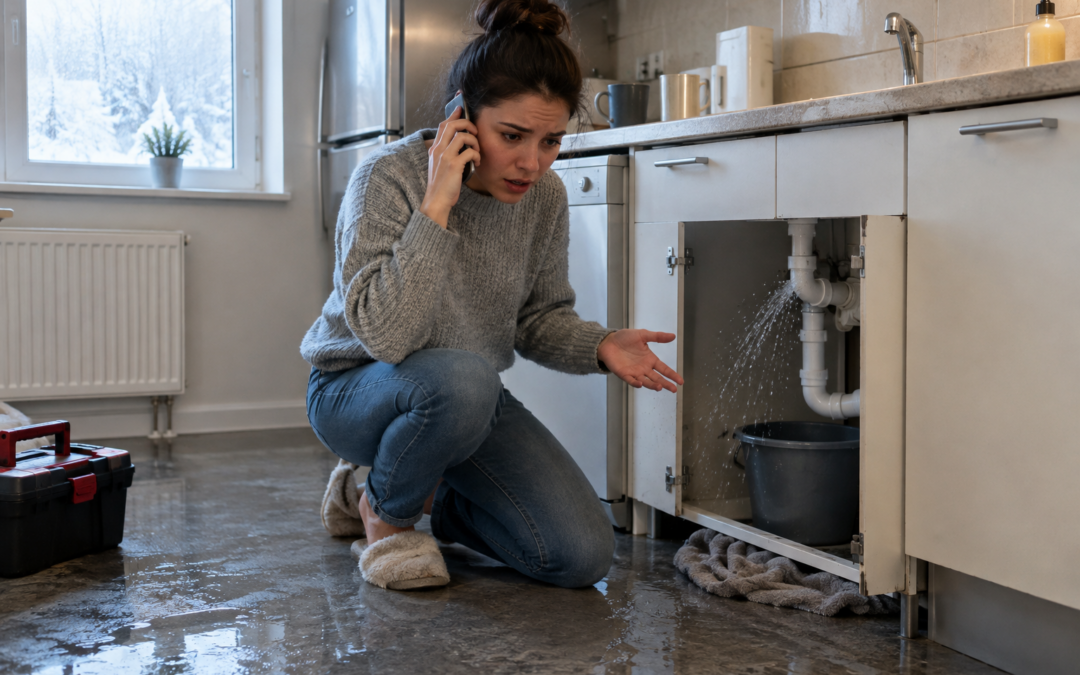
It’s the first real cold snap of the season. You wake up, walk into the kitchen of your apartment, and there’s water spraying from under the sink or coming through the ceiling from the unit upstairs. Your couch, rug and laptop bag are soaking it up. After “how do I stop this?”, the next question is usually: Who’s paying for this?
The answer depends on what got damaged, what caused the burst pipe, and what insurance each person carries. Here’s how it usually works for renters, landlords and property managers in Northern Colorado.
This is general information, not legal advice. Your lease and your insurance policies control the details.
In short: The landlord is usually responsible for repairing the pipe and the building (walls, floors, cabinets), usually through their property insurance. The renter is usually responsible for their own belongings, which is what renters insurance is for. If a tenant’s negligence caused the burst, the tenant can be on the hook for more. Either way, stop the water, notify the landlord right away, and document everything.
First: Stop the Water and Notify Your Landlord
- Shut off the water. Look for the shutoff valve under the sink or behind the toilet, or the unit’s main shutoff. In many apartment buildings, maintenance has to shut off water to a whole section, so call the emergency maintenance line right away.
- Stay away from electricity. Don’t touch outlets, cords or appliances that are wet or sitting in water.
- Notify your landlord or property manager immediately, by phone and then in writing (text or email) so there’s a timestamp.
- Take photos and video of the leak, the water and every damaged item before you move anything.
- Move your belongings out of the water and to a dry place.
- Call your renters insurance company to start a claim for your belongings.
Who Pays for What
The landlord usually covers:
- Repairing the burst pipe and plumbing
- Drying and repairing the building: drywall, flooring, cabinets, insulation
- Mold that results from the leak, when it’s addressed as part of the repair
- Keeping the unit livable, since Colorado’s warranty of habitability law requires landlords to maintain working plumbing and address serious water and mold problems after they get notice
The renter usually covers:
- Their own personal property: furniture, clothes, electronics, rugs
- Their own temporary housing costs if the unit isn’t livable, unless the lease or local law says otherwise
- Damage they caused through negligence
A landlord’s property insurance covers the building, not your stuff. That surprises a lot of renters.
When the Renter Can Be Responsible
If the pipe burst because of something the tenant did or didn’t do, the landlord (or their insurer) may try to recover the repair costs from the tenant. Common examples:
- Turning the heat off, or setting it very low, during a freeze, especially while away
- Leaving windows open in freezing weather
- Ignoring a known leak and not reporting it
- Not following lease rules, like keeping the heat at a minimum temperature or dripping faucets during extreme cold
Read your lease. Many Colorado leases include winter requirements, and following them protects you.
What Renters Insurance Covers (and Doesn’t)
Renters insurance policies vary, but many include:
- Personal property damaged by sudden and accidental water, like a burst pipe
- Loss of use, also called additional living expenses, which can help pay for a hotel if the unit can’t be lived in
- Personal liability, which may help if you accidentally cause water damage to the building or a neighbor’s unit
What it usually doesn’t cover: the building itself, flood from outside water (that’s separate flood insurance), and damage from a slow leak you knew about and ignored. Check your policy and your deductible.
Document Everything
- Photos and video of the damage, with the date
- A list of damaged items with approximate value, plus receipts if you have them
- Copies of every message to your landlord or property manager
- The names of anyone who came out: plumbers, maintenance, restoration crews
- Receipts for any emergency costs, like a hotel or meals
For Landlords and Property Managers: Call Revive Before You Call Insurance
A burst pipe in a rental affects more than one person, and sometimes more than one unit. Water runs down into the units below, soaks subfloors and wicks up walls. Mold can begin growing on wet materials in 24 to 48 hours, and tenants can’t stay in a unit that isn’t dry and safe.
Calling Revive first means the water gets extracted and drying starts fast, every affected unit gets checked with moisture meters and thermal imaging, and you get detailed documentation for your carrier and your tenants. We’re a family-owned, IICRC-certified restoration company based in Johnstown. We answer 24/7, work with every insurance carrier, and the inspection is free.
Renters: report it to your landlord first, then share our number. Landlords and property managers: call Revive Restoration at (720) 340-3499 before you call your insurance company.
Renters & Burst Pipe FAQs
Who pays when a pipe bursts in an apartment in Colorado?
Usually, the landlord pays to repair the pipe and the building, typically through their property insurance, and the renter’s own renters insurance covers their personal belongings. If the tenant’s negligence caused the burst, such as turning off the heat during a freeze, the tenant may be responsible for more. Your lease and policies control the details. This is general information, not legal advice.
Does renters insurance cover water damage from a burst pipe?
Many renters insurance policies cover personal property damaged by sudden and accidental water, like a burst pipe, and may also cover additional living expenses if the unit can’t be lived in. They usually don’t cover the building itself, outside flooding, or damage from a known leak that was ignored. Check your policy.
Is my landlord responsible for my damaged belongings?
Usually not, unless the landlord’s negligence caused the damage. A landlord’s property insurance covers the building, not a tenant’s personal property. That’s why renters insurance matters.
What should I do first if a pipe bursts in my apartment?
Shut off the water if you can find the valve, stay away from wet electrical items, call your landlord or the emergency maintenance line right away, then follow up in writing. Photograph everything before moving it, move belongings to a dry spot, and call your renters insurance company.
Can a tenant be charged for frozen pipe damage?
Possibly. If a tenant turned off the heat, left windows open in freezing weather, ignored a known leak or broke lease rules about winter care, the landlord or their insurer may try to recover repair costs. Following your lease’s winter rules helps protect you. Landlords can call Revive at (720) 340-3499 for 24/7 water damage response.
Related reading: apartment and condo water damage responsibility, a landlord’s guide to rental water damage, the off-campus renter’s survival guide, and how to prevent frozen pipes.
Serving All of Northern Colorado
We restore apartments, condos and rental homes in Fort Collins, Greeley, Loveland, Windsor, Johnstown, Longmont, Evans, Broomfield, Thornton, and Westminster. See every community we serve on our service areas page, or learn more about our water damage restoration and mold remediation services.