

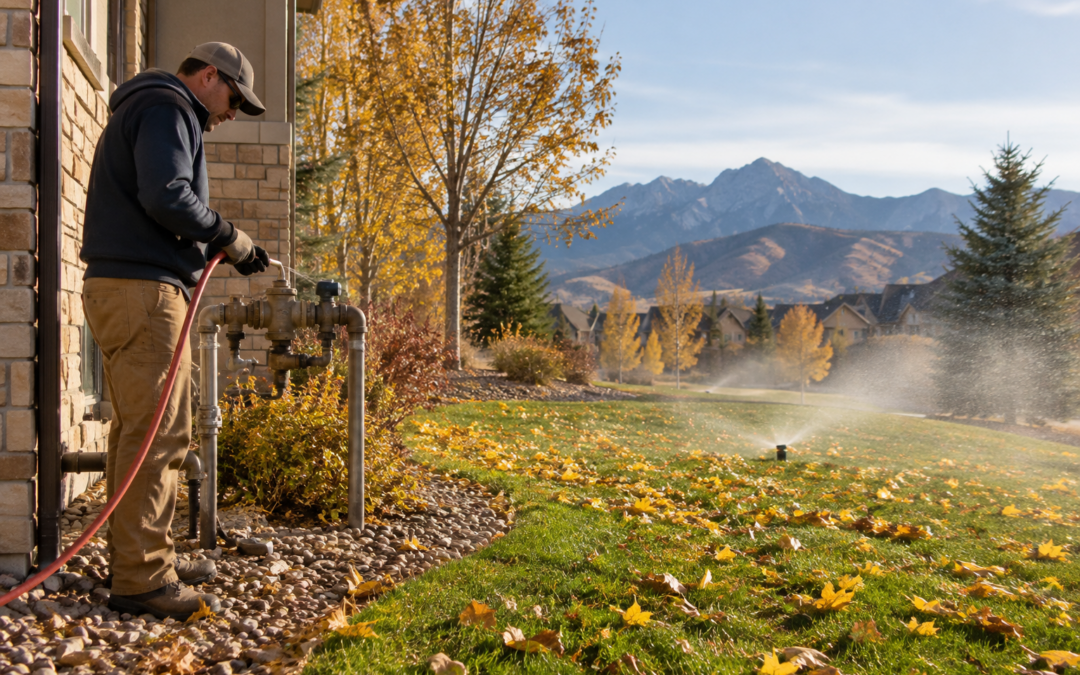
Every fall across Northern Colorado, there’s one chore that’s easy to put off: blowing out the sprinkler system. The lawn is going dormant and the weather still feels mild, so it slides to next weekend. Then a cold front drops over the Front Range overnight, and the water sitting in your irrigation lines freezes.
You usually don’t find out until spring. You turn the system back on and get a geyser in the yard, a soggy patch along the foundation, or water coming into a window well or the basement. By then the damage has had all winter to get started.
In short: Sprinkler lines, the backflow preventer and the supply pipe that feeds them all hold water that can freeze and crack. Shut the irrigation water off inside the house, drain or blow out the lines before the first hard freeze, and protect the backflow preventer. If you find water in the basement or along the foundation in spring, call a restoration company before you call insurance.
Why Sprinkler Lines Burst in Colorado
Water expands when it freezes. Inside a pipe, that expansion has nowhere to go, so it splits PVC, cracks fittings and breaks the brass parts of the backflow preventer. Northern Colorado makes this worse in a few ways:
- Early, sudden freezes. It’s common to have a warm afternoon and a hard freeze that same night in October.
- Freeze-thaw cycles. Days above freezing and nights well below it stress the same weak spots again and again all winter.
- Exposed backflow preventers. Most homes here have the backflow device above ground near the foundation, where it’s hit by wind and cold.
- Supply lines that run through the basement. In many homes the irrigation water comes off the main line in the basement or crawlspace and passes through the foundation wall. If that section isn’t shut off and drained, a crack can leak right into your house.
How a Skipped Blowout Turns Into Water Damage
A cracked sprinkler head is a landscaping problem. The bigger risk is the pipe closest to your house:
- A split supply line inside the wall or basement. When the system is turned back on in spring, water runs straight into finished drywall, carpet or a storage room.
- A cracked line near the foundation. Water soaks the soil next to the house and finds its way into window wells, cracks and basement walls.
- A broken backflow preventer. It can spray at full pressure against siding and the foundation until someone notices.
- Slow, hidden leaks. A small crack in a buried line can drip into the soil for weeks, and the first sign may be a musty basement.
DIY Blowout vs. Hiring a Pro
Plenty of homeowners blow out their own system. If you go the DIY route:
- Shut off the irrigation water supply at the main shutoff valve, usually in the basement or crawlspace, and open the small drain cap or valve next to it if there is one.
- Use the right compressor. A small pancake compressor often can’t move enough air. Keep the pressure moderate, since too much pressure can damage the pipes and heads. Check your system’s guidance.
- Blow out one zone at a time until only mist comes out of the heads. Never run air through a dry zone for long, because friction can heat and damage the parts.
- Wear eye protection and never stand over the backflow preventer or any part under pressure.
- Leave the backflow valves half-open (at a 45-degree angle) when you’re done, the way most local irrigation pros recommend, and insulate the device with a cover.
If you’re not sure where your shutoff is, don’t own a large compressor, or have a complex system, hire an irrigation company. Book early. Their schedules fill up fast once a freeze is in the forecast.
Signs Your Backflow Preventer or Lines Already Cracked
- Water spraying or dripping from the backflow device when the system is turned on
- A zone with low pressure, or heads that won’t pop up
- A soggy or sunken area in the yard, especially near the house
- Water in a window well, damp basement walls or a musty smell near where the supply line enters
- A water bill that’s higher than normal
Found Water in Spring? Do This First
- Shut off the irrigation supply valve inside the house right away. If you can’t find it, shut off the main water line.
- Turn off power to any wet area of the basement if water is near outlets or cords.
- Take photos and video of the water, the leak and anything that’s wet before you move it.
- Call Revive before you call insurance. We’ll find out how far the water went, measure moisture in the walls and floor, and document everything so your claim starts with facts.
Call Revive Before You Call Insurance
Water from a sprinkler line usually gets into the lowest, most finished part of the house: the basement. It soaks carpet pad, wicks up drywall and can start growing mold in 24 to 48 hours. We’re a family-owned, IICRC-certified restoration company based in Johnstown. We answer 24/7, work with every insurance carrier, and the inspection is free.
Water in the basement from a sprinkler line? Call Revive Restoration at (720) 340-3499 before you call your insurance company.
Sprinkler Winterization FAQs
When should I blow out my sprinklers in Northern Colorado?
Most homeowners along the Front Range blow out their sprinkler systems from early October to early November, before the first hard freeze. Watch the forecast. If overnight lows in the 20s are coming, it’s time, even if the days are still warm.
What happens if I don’t winterize my sprinkler system?
Water left in the lines, the backflow preventer and the supply pipe can freeze, expand and crack them. You often won’t notice until spring, when turning the system on causes leaks in the yard, along the foundation or even inside the basement where the supply line comes into the house.
Can a frozen sprinkler line flood my basement?
Yes. In many Northern Colorado homes, the irrigation supply comes off the main water line in the basement and runs through the foundation wall. If that pipe freezes and splits, water can leak into the basement when the system is turned back on, or into the soil right next to the foundation.
Should I cover my backflow preventer for winter?
Yes. After the system is drained or blown out, an insulated cover or bag helps protect the backflow preventer from wind and extreme cold. It doesn’t replace draining the system, but it adds protection to the most exposed part.
Does homeowners insurance cover water damage from a broken sprinkler line?
Many policies cover sudden and accidental water damage inside the home, but coverage varies, and insurers may question damage tied to maintenance like winterizing. Every policy is different. Calling Revive at (720) 340-3499 first gets the damage professionally documented before you file.
Related reading: sprinkler and irrigation leaks that flood basements, how to winterize your home against frozen pipes, and window well flooding.
Serving All of Northern Colorado
We handle basement and foundation water damage in Johnstown, Windsor, Loveland, Fort Collins, Greeley, Timnath, Severance, Berthoud, Longmont, and Wellington. See every community we serve on our service areas page, or learn more about our water damage restoration and mold remediation services.