
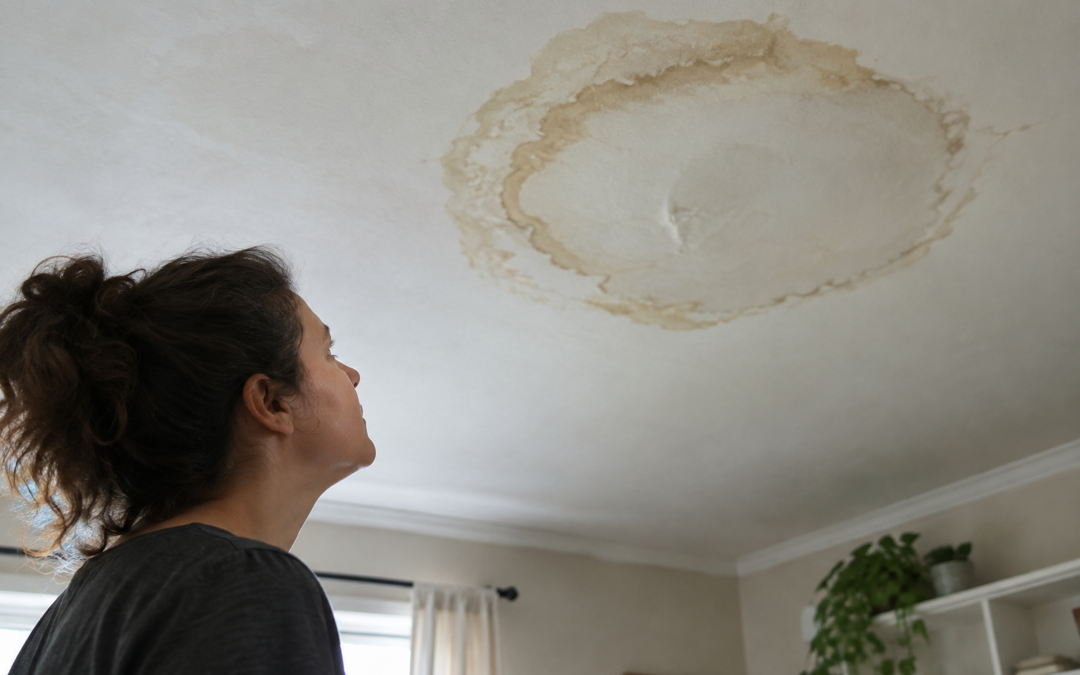
A water stain on the ceiling is something you can’t stop looking at once you see it. Maybe it’s a faint yellow ring above the couch, a brown blotch under the upstairs bathroom, or a spot that seems a little bigger every week. You can’t see past the drywall, so it’s hard to tell how serious it is.
The good news is that the stain itself gives you clues. Its color, shape and location can tell you a lot about where the water is coming from and how urgent it is.
In short: A ceiling water stain means water got into the ceiling from above: a roof leak, a plumbing line, a bathroom fixture or an HVAC unit. Fresh, growing or bulging stains are urgent. Old dry stains still need to be checked for hidden moisture and mold. Don’t just paint over it. Find the source, dry it properly and document it.
What the Stain Is Telling You
Color
- Yellow or light tan: often a newer or smaller leak, or water that came through clean, like a supply line.
- Brown with darker rings: water that has soaked in and dried more than once. Each ring is often a separate wet-and-dry cycle, which points to a repeating leak, such as a roof that only leaks in storms or snowmelt.
- Gray, green or black spots: possible mold growth. Treat this as more serious.
Shape
- A round spot with rings: water dripping onto one point from above and spreading out.
- A long streak or line: water running along a joist, a pipe or a drywall seam before it shows up.
- A bubble or sag: water is pooling right behind the paint or drywall. This needs attention now.
- Cracked or peeling paint: moisture has been there long enough to break down the finish.
Location
- Top floor, near exterior walls or corners: usually the roof, flashing, ice dams or attic condensation.
- Under a bathroom: a leaking toilet seal, shower pan, tub drain or failed grout and caulk.
- Under a kitchen or laundry room: a dishwasher, fridge line, sink drain or washing machine hose.
- Near an air vent or in the middle of an upper floor: an attic HVAC unit, a clogged condensate line or condensation on ductwork.
- Appears after a cold snap: an ice dam or a frozen pipe in an exterior wall or the attic.
Is a Water Stain on the Ceiling an Emergency?
Treat it as urgent if any of these are true:
- The stain is wet to the touch, dripping or getting bigger
- The ceiling is sagging or bubbling
- It’s near a light fixture, ceiling fan or smoke detector
- You smell something musty, or you see dark spots
- It showed up during or right after a storm or a hard freeze
An old, dry stain that hasn’t changed is less urgent. It still deserves a moisture check, because drywall can look dry on the surface while the insulation and framing behind it stay wet.
Safe First Steps
- Stop the water if you can. If the stain is under a bathroom or appliance, stop using it. If it’s actively dripping and you don’t know the source, shut off the main water valve.
- Turn off power to any light fixture or fan near the wet area at the breaker.
- Protect the room. Move furniture and electronics out of the way, and put down a bucket and towels.
- Deal with a bulge carefully. If the ceiling is bubbling with water, put a bucket underneath and poke a small hole at the lowest point with a screwdriver to let the water drain in a controlled way. This takes pressure off the drywall so it’s less likely to collapse. Stay off ladders if the ceiling is badly sagging, and keep everyone out from under it.
- Take photos of the stain, the room and anything damaged before you clean up.
Why You Shouldn’t Just Paint Over It
Stain-blocking primer will hide the mark, but it won’t fix the leak, dry the insulation or stop mold. Wet insulation above a ceiling stays damp for a long time, and mold can begin growing on wet materials in 24 to 48 hours. If you plan to sell your home later, an undocumented repaired stain can also raise questions during an inspection.
How Revive Finds the Source
We use moisture meters and thermal imaging to trace the water from the stain back to where it’s coming from, often without tearing open more ceiling than we need to. Then we dry the ceiling, insulation and framing properly, check for mold, and document every reading for your records and your insurance company.
Call Revive Before You Call Insurance
Insurance adjusters want to know what caused the leak and how long it’s been going. Calling us first means you have moisture readings, photos and a clear cause before you file. We’re a family-owned, IICRC-certified company based in Johnstown, we answer 24/7, and the inspection is free.
Found a water stain on your ceiling? Call Revive Restoration at (720) 340-3499 before you call your insurance company.
Ceiling Water Stain FAQs
What causes a water stain on the ceiling?
A ceiling water stain means water reached the ceiling from above. The most common causes are roof leaks, ice dams, leaking bathroom fixtures, plumbing supply or drain lines, attic HVAC condensate lines and condensation in the attic. The stain’s location usually points to the source.
Is a brown water stain on the ceiling serious?
It can be. Brown rings often mean water has soaked in and dried more than once, which points to a repeating leak. Even if it’s dry now, the insulation and framing above it may still be wet, and mold can grow out of sight. Have it checked for moisture before you repair it.
Should I poke a hole in a bulging ceiling?
If the ceiling is bubbling with water, putting a bucket underneath and poking a small hole at the lowest point lets the water drain in a controlled way and reduces the chance of a collapse. Turn off power to nearby fixtures first, and keep people out from under a badly sagging ceiling.
Why won’t my ceiling stain dry out?
Ceiling drywall can stay damp because the insulation above it holds water, or because the leak is still active. A stain that keeps growing or never seems to dry usually means the source hasn’t been fixed. A restoration company can find the moisture with meters and thermal imaging.
Can I just paint over a water stain on the ceiling?
Not until the leak is fixed and the ceiling is fully dry. Paint hides the stain but doesn’t stop the leak, dry wet insulation or prevent mold. Call Revive at (720) 340-3499 for a free inspection to make sure it’s really dry first.
Related reading: roof leak water damage, ice dams in Northern Colorado, attic water damage signs, and signs of a hidden leak behind your walls.
Serving All of Northern Colorado
We trace and dry ceiling leaks in Johnstown, Windsor, Loveland, Fort Collins, Greeley, Milliken, Firestone, Frederick, Erie, and Eaton. See every community we serve on our service areas page, or learn more about our water damage restoration and mold remediation services.